
Although ospreys mate for life, they part ways each year for the fall migration. They migrate as individuals, not in groups or flocks. They travel in small skeins like the ones we have previously described.
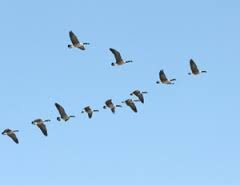
A skein of ospreys in V formation flight
Usually, females leave the nesting area first, followed by the males. Mates do not see each other again until they return to their nest in spring. It would be a very rare coincidence if a pair ended up in the same wintering place.
The young are left behind when parents migrate. A few days later, the young take off, too. Each one finds its own route south and winters in a different place, just as the adults do. They do not follow their parents, but work on pure instinct, following a fairly simple two-line program: Go south and stay over land as long as possible. This gets them to the Keys in Florida, the southeastern tip of Cuba, and many of them to the little peninsula on the south coast of Hispaniola. From here they make a last leap of faith and fly to South America.
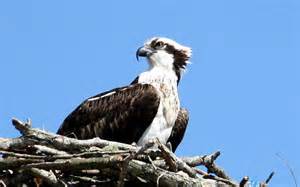
Tweedy stands alone.
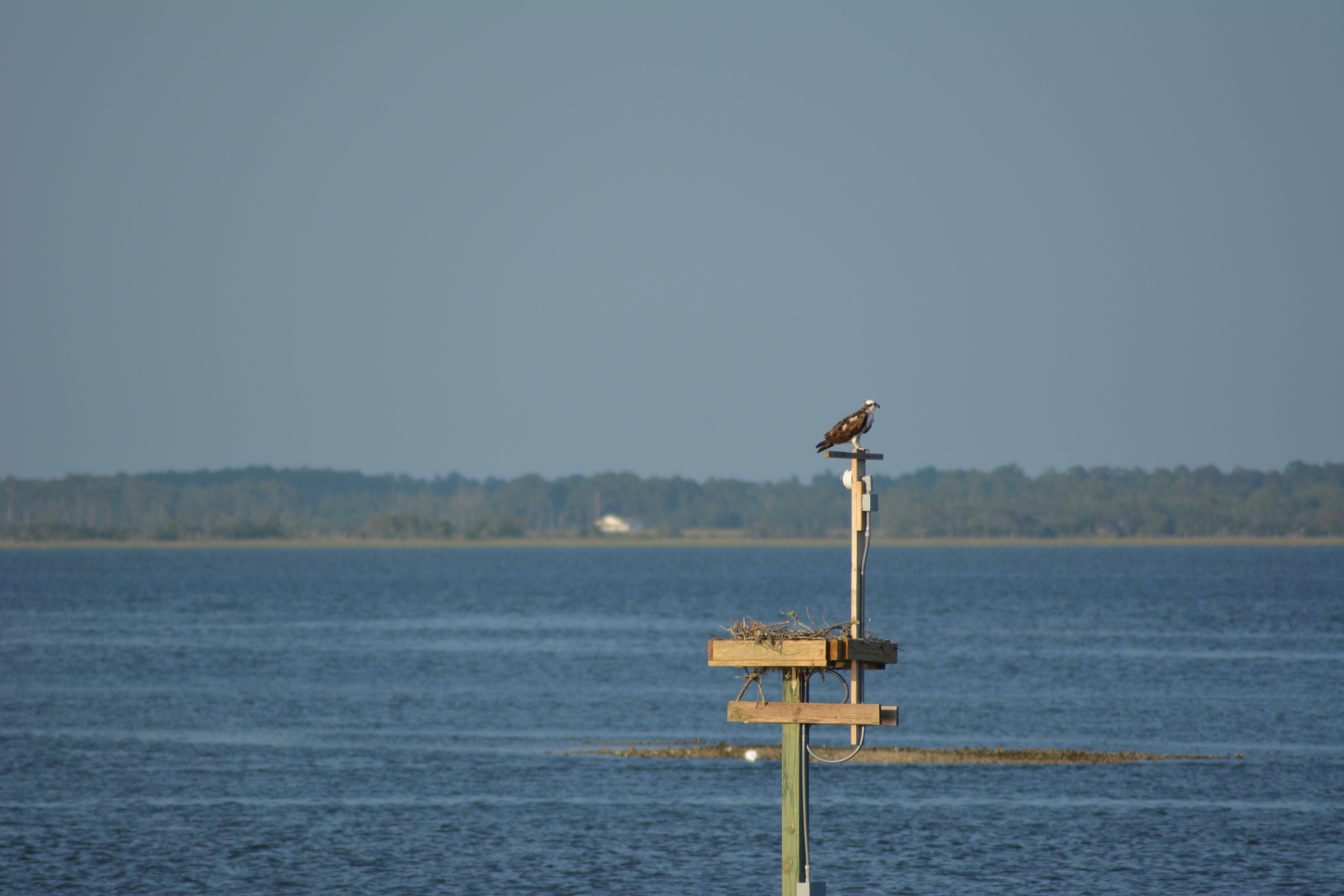
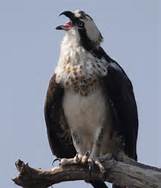
Hey! Where has everybody gone?
The Pacific Northwest birds make a non-stop sprint migration over the western deserts and winter in Mexico and Central America. These birds rarely go as far as South America.
East coast birds go down the east coast, some fairly far inland, some along the coast, to the tip of Florida, over to Cuba, and then on to Hispaniola (Haiti and the Dominican Republic). Some winter in the Caribbean, but the majority make the arduous trip across the Caribbean to Venezuela.
From there, they scatter across much of the South American continent, some going as far as the Pantanal in Paraguay and Southwestern Brazil. Some truly overachieving birds even make it to Argentina.
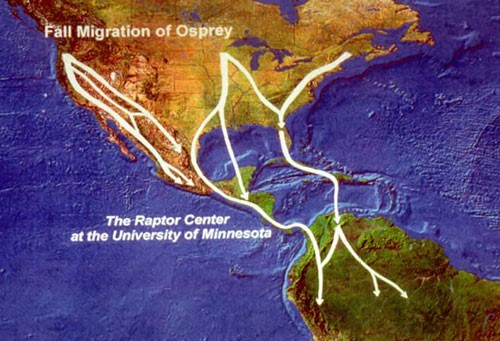

Migration Map of North American Osprey
Osprey tend to be as faithful to their wintering spot in South America as they are to their nesting area up north.
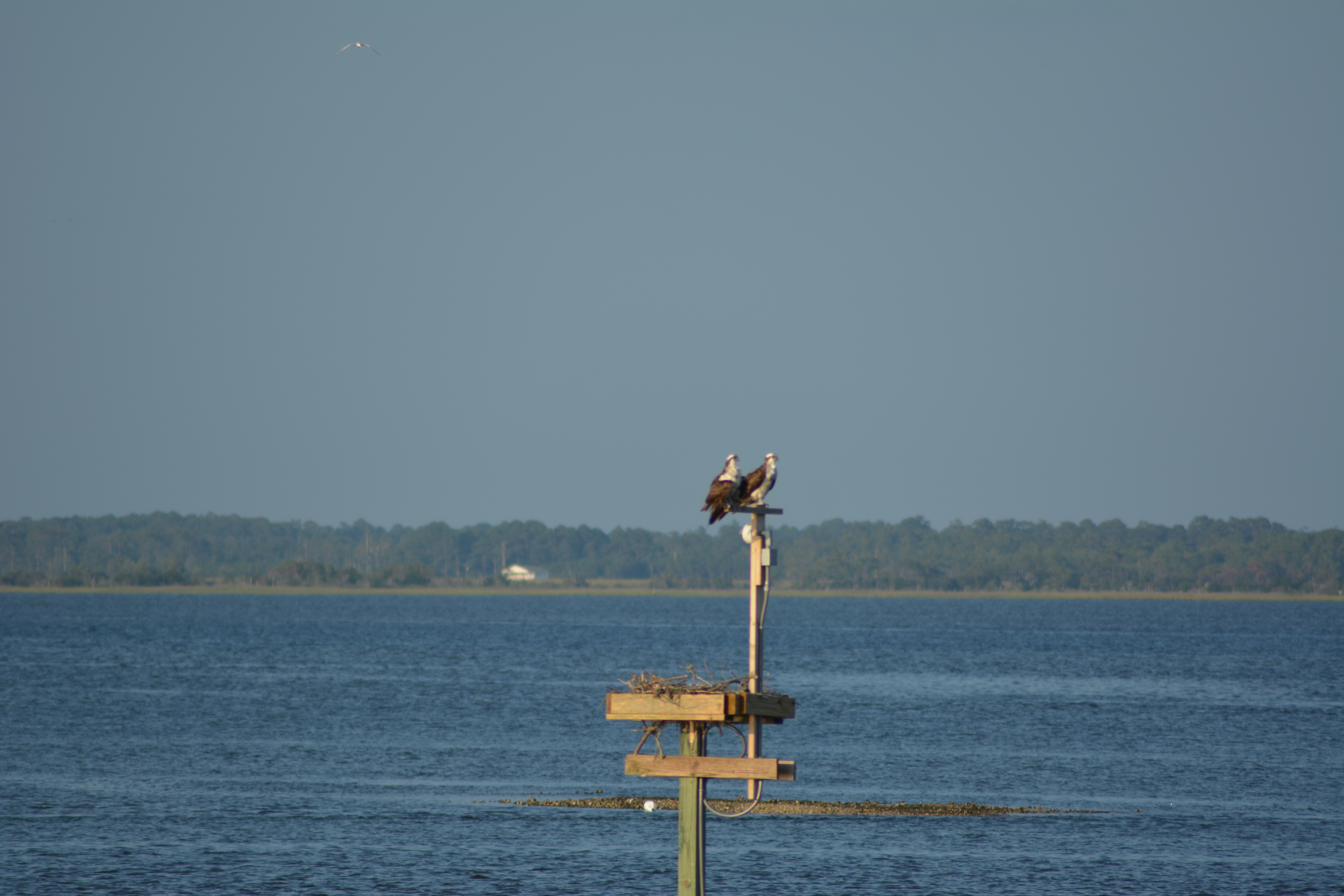
Harriett left Friday. She wished the Doctor well and posed for a super photo op.
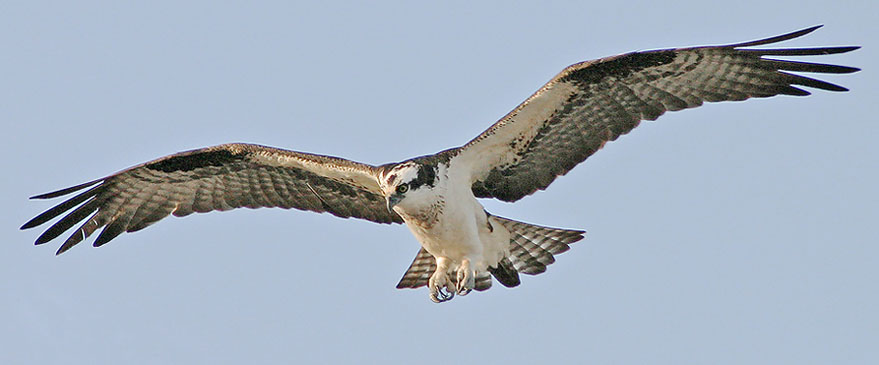
Ozzie left yesterday. He magnanimously made a fly by of the Doctor’s big nest to show off his transmitter.

“Those are good birds,” said the female human that lives with the Doctor.
















 Osprey Tales