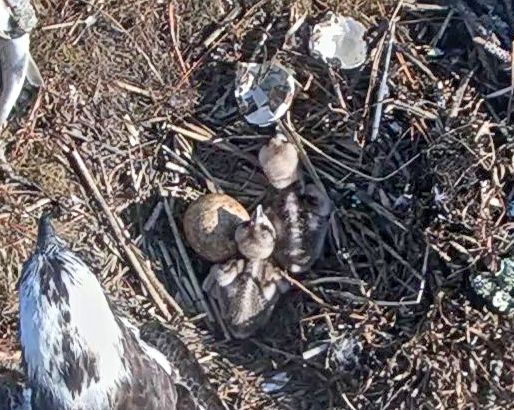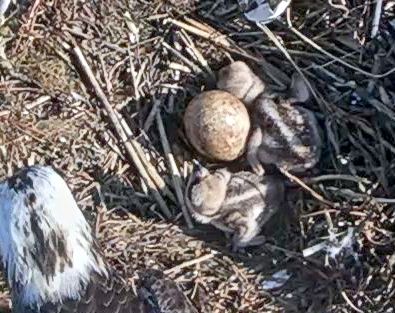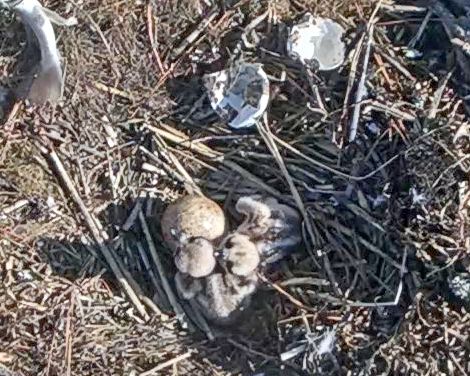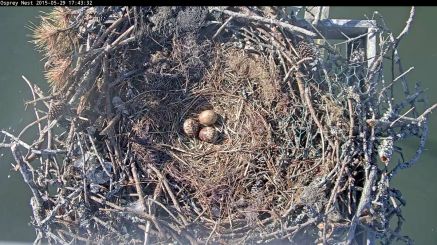
Gestation Day

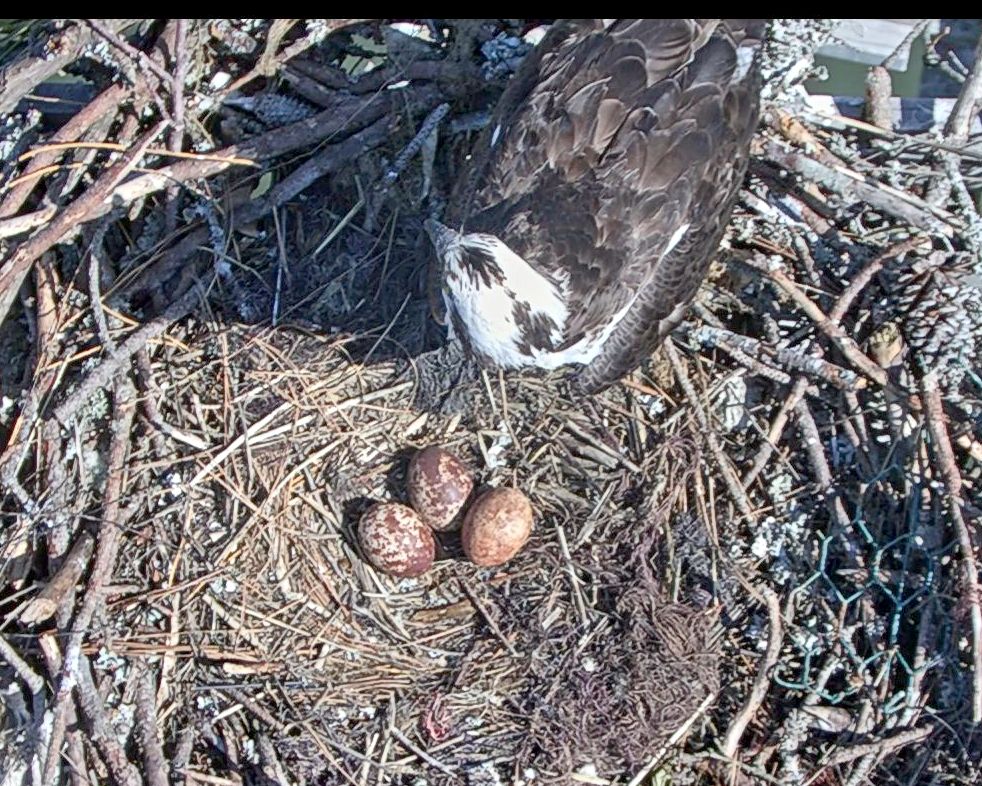
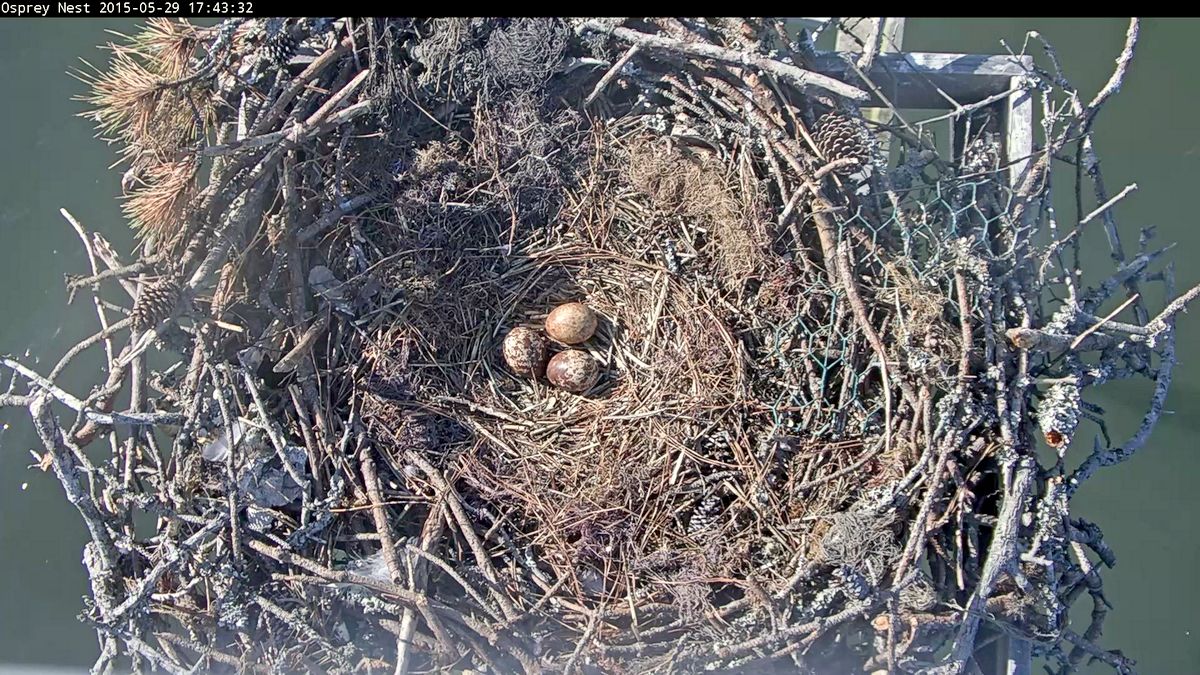
Eggs 1

May 31                 Gestation day # 36

June 1                   Gestation day # 37

June 2 (Tuesday)                   Gestation day # 38

June 3 (Wednesday)             Gestation day # 39

June 4 (Thursday)                 Gestation day # 40

June 5 (Friday)                       Gestation day # 41

June 6 (Saturday)                  Gestation day # 42

June 7                   Gestation day # 43

June 8                   Gestation day # 44


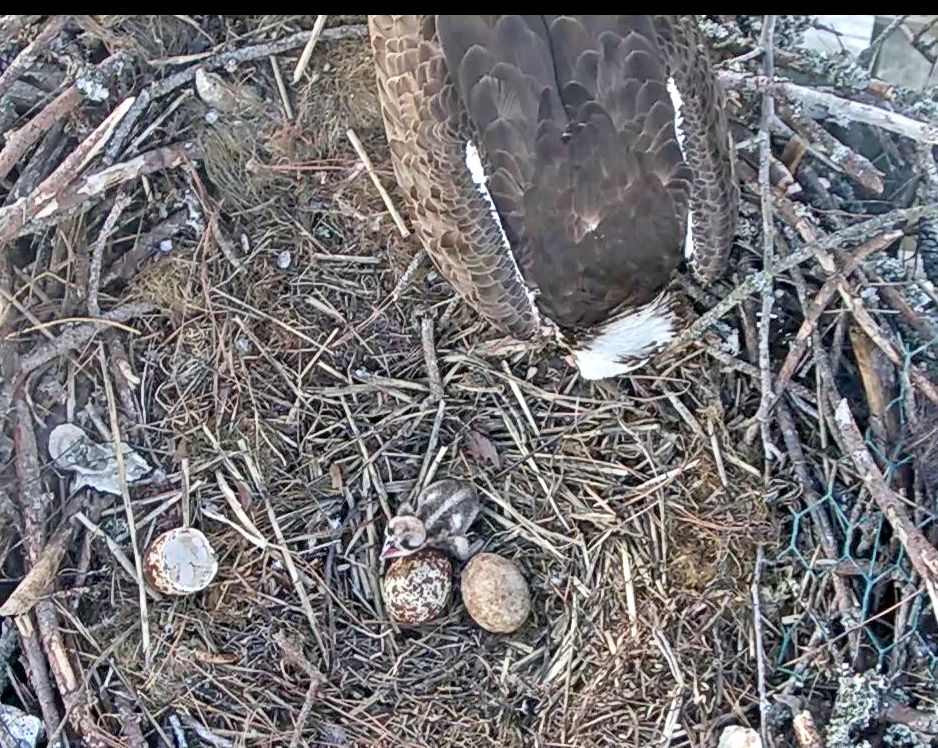
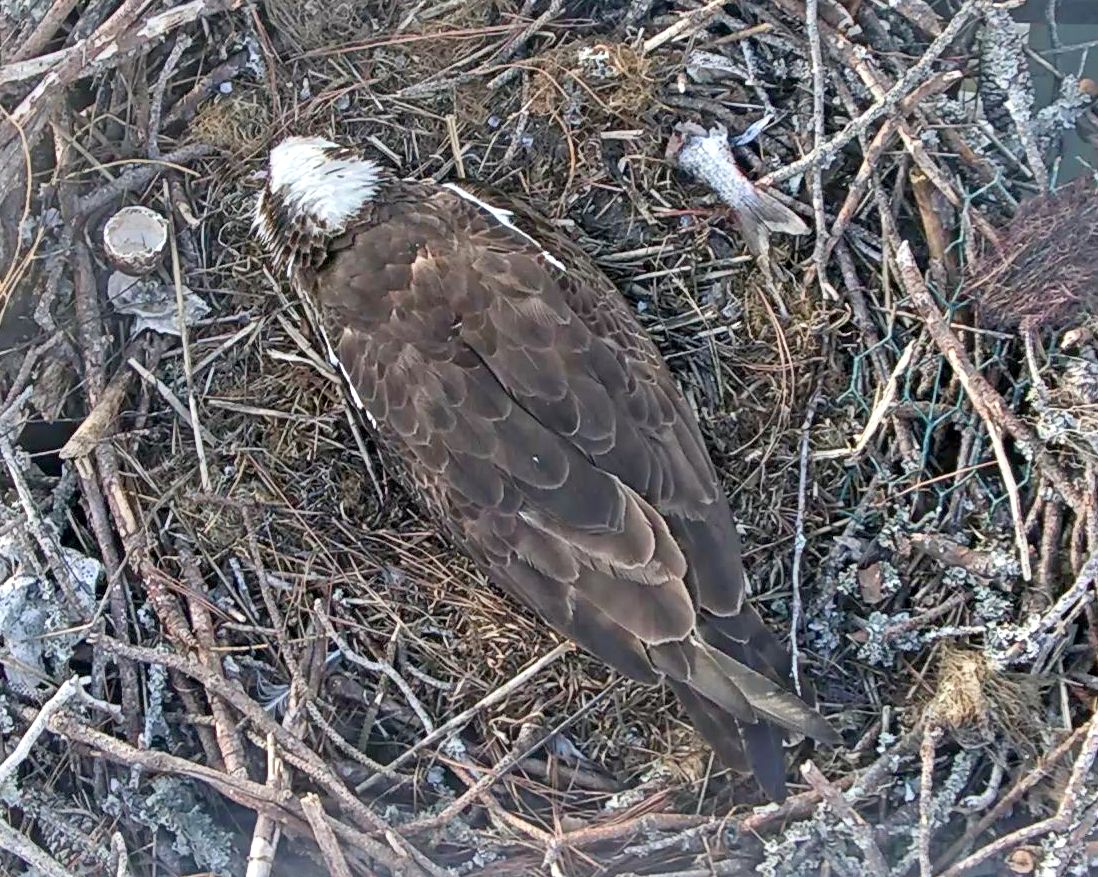
Who remembers the gestation period of the Osprey egg? (34 to 42 days)

Who remembers if all 3 of Harriett’s eggs will hatch at once or one at a time days apart? (Approximately 2 days apart)

Who remembers the disadvantage of the 3rd born? Who remembers the chances of a new born Osprey reaching one year of life?  (Depends on the food supply and strength of 3rd born)

Who remembers the perils a new Osprey chick must face?  (“Did you say fly to South America?”)

—————————————————————————————-

DSC_0174

“Are you ready for this?” Asked Harriet.

“Am I ready! You know I’m ready. The question is, are you ready?”

“Of course I’m ready,” replied Harriett without umbrage. Have I not done this twice before?”

“Yeah, sure, but that was with a singleton and twins. Do you think you can handle triplets?”

Harriet tried to disregard Ozzie’s imprudent remarks.

“You just keep the predators away and keep the fish coming,” she said.

Then she gave him a little ego boost.

“Who is the best fisherman on the East Coast and probably of all North America?” She offered with a twitch of her tail feathers.

Ozzie knew who she was talking about. It was he of course.  And if you don’t believe it, just take a look at some of the upcoming photographs and videos.

 Ozzie the Great Fisherman

Posted in Ospreys | 2 Comments

What to Expect – Altricial vs Precocial

Songbirds and most seabirds

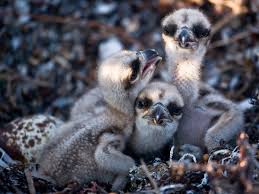
Songbirds and most seabirds have altricial young, meaning that the newly hatched birds are blind, featherless, and helpless. Immediately after hatching, altricial birds can do little more than open their mouths to beg for food. They remain in the nest where the parents can feed and protect them while they continue to develop. For the first week of life, most altricial birds cannot control their own body temperature and must be constantly brooded (kept warm) by their parents. By the end of the first week, their eyes are usually open and their feathers are beginning to emerge. During this period, nestlings can experience remarkable growth by doubling their body weight several times!

download (1)
Altricial young

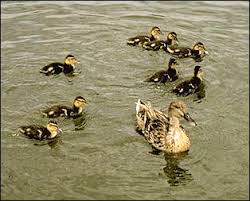
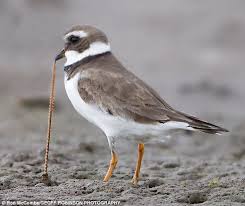
Precocial species, such as ducks and many shorebirds, are born fully feathered, mobile, and with eyes open. Incubation periods are longer for precocial birds than altricial birds, allowing for increased embryonic development in the egg, and therefore they have relatively advanced motor and sensory functions at hatching.

images (1)
“Quack, quack!” Said Mama Duck.”

“Quack, quack! Yourself,” mimicked Harriett sardonically.

Posted in Ospreys | 2 Comments

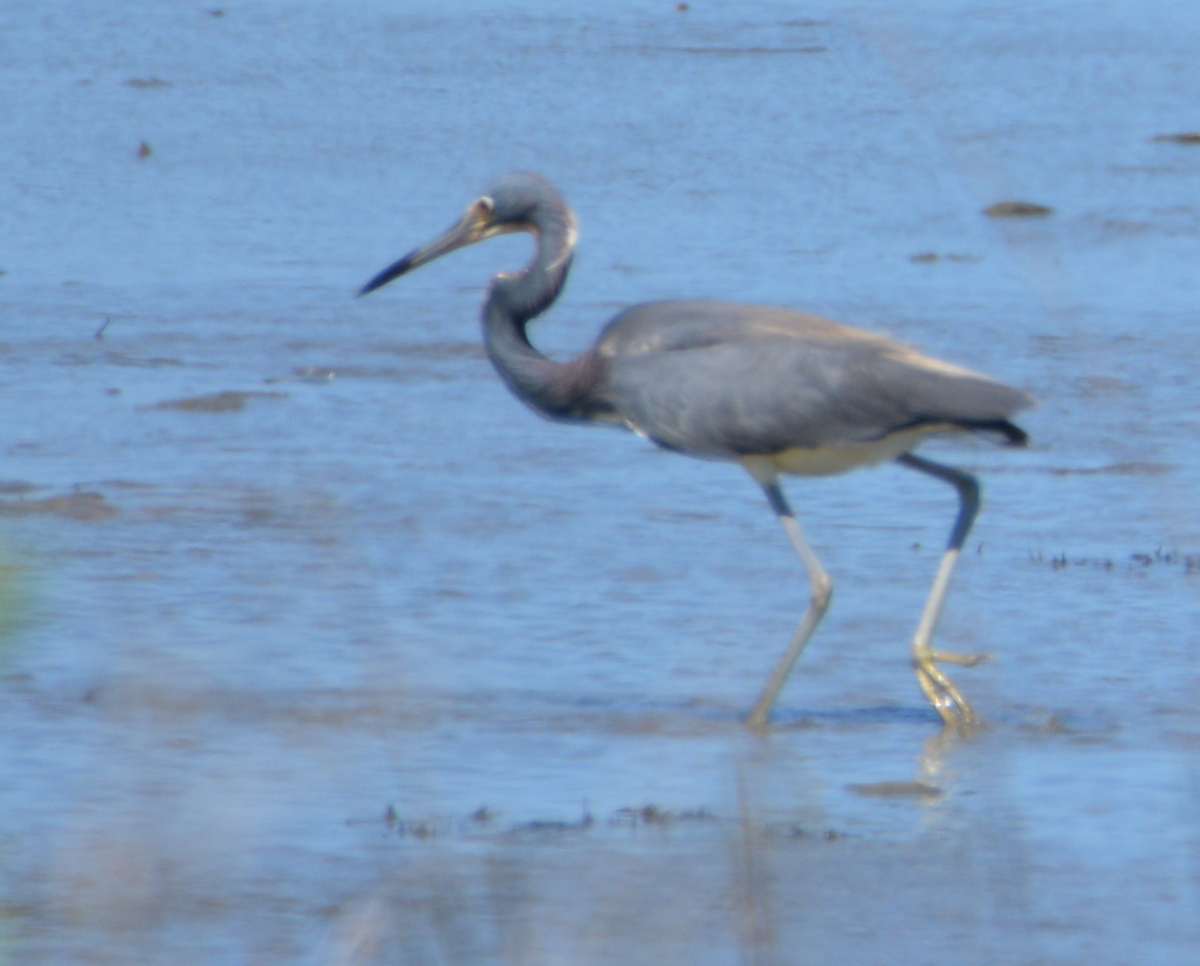
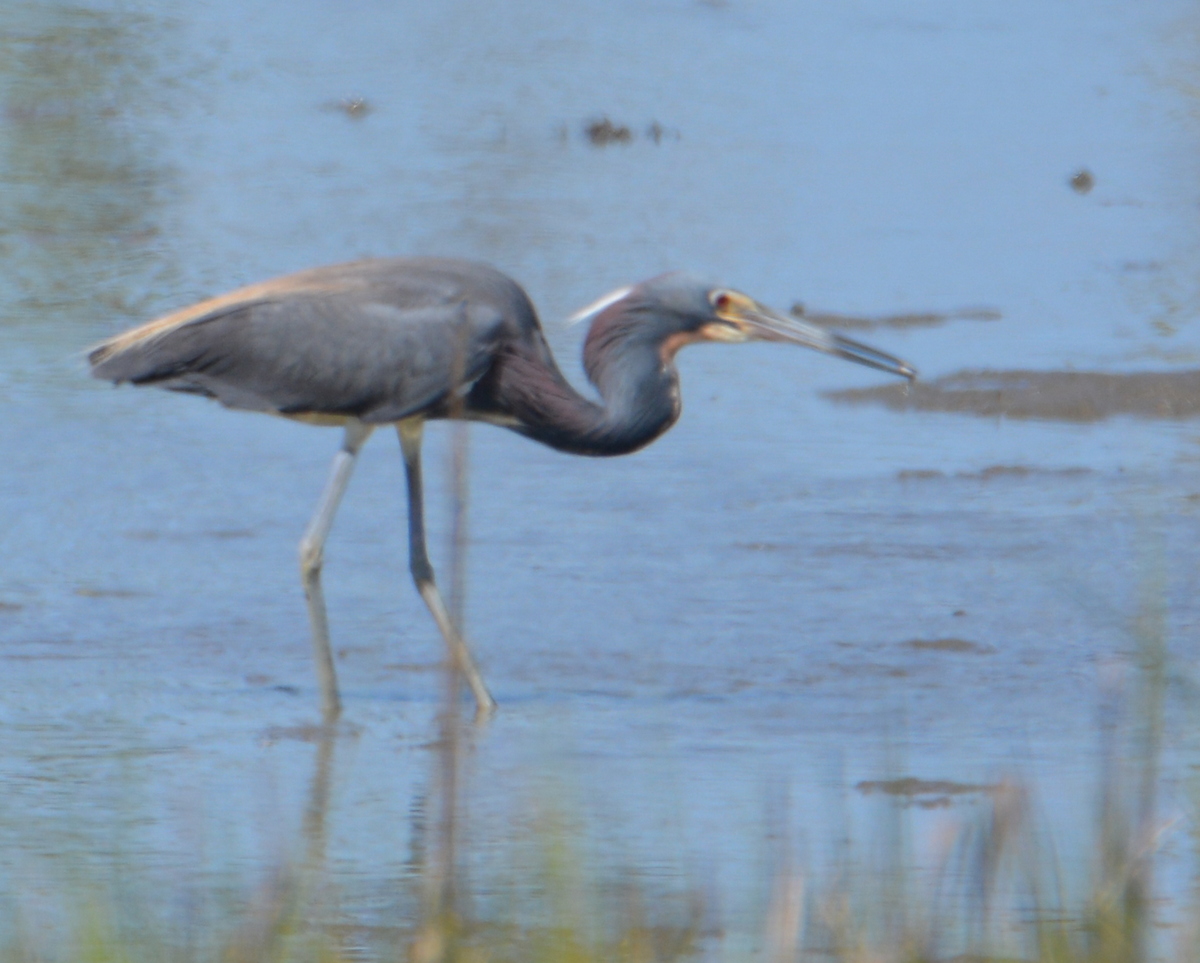
The Tri-Colored Egret

“Wow!” Exclaimed Ozzie.

“Who do you think showed up today?”

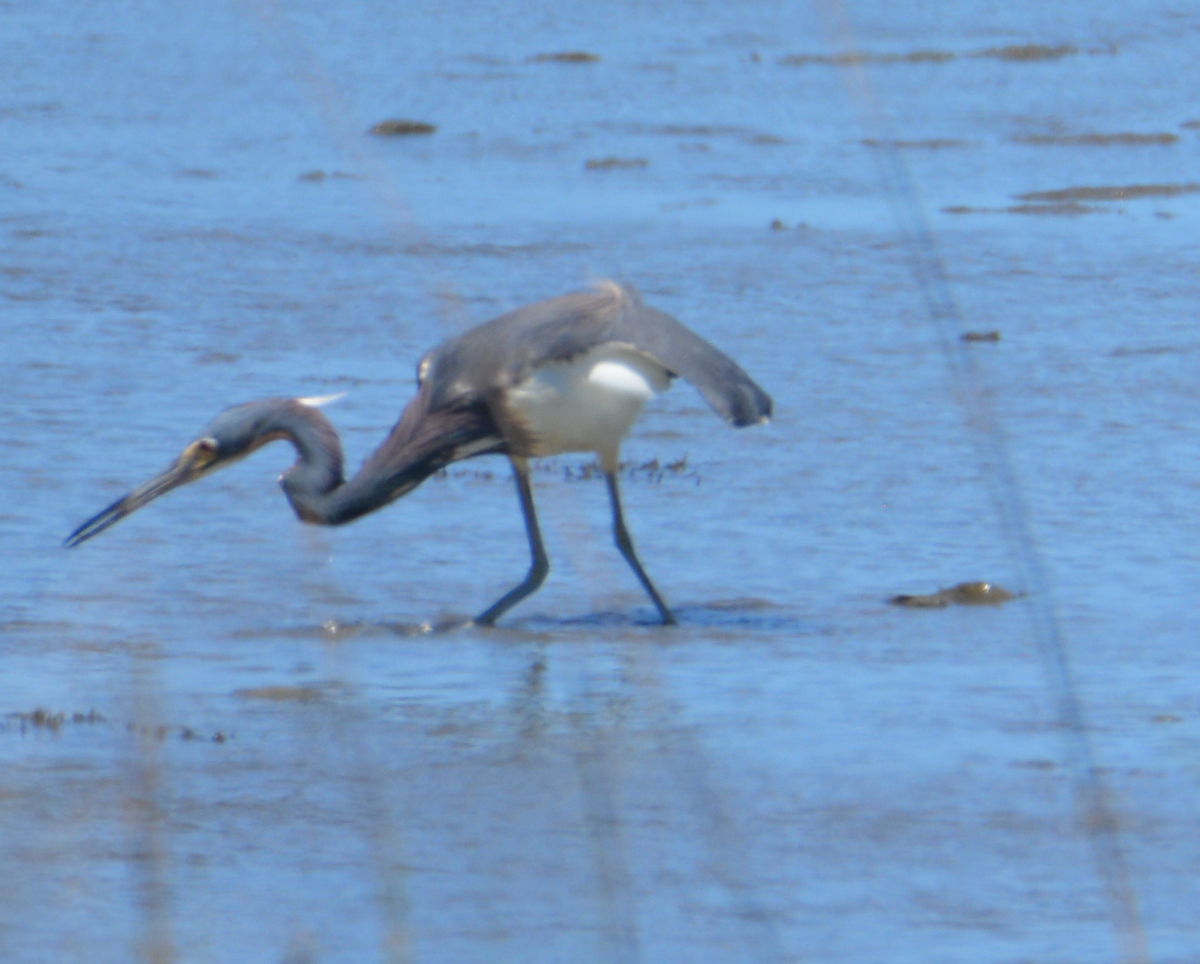
The elusive Tricolored Egret passed through on her way north.  “How are you, Tricolored Egret,” asked Ozzie with baited breath.

Tricolored Egret was in no mood to chat. She was hungry. She found this nice place beneath the Taj Mahal where plenty of mature secondary consumers thought they were safe. She gobbled them up one by one.

DSC_0002 DSC_0034 (2)

Ozzie was distracted.

“Wow!” Thought Ozzie. “Take a look at those legs!”.

DSC_0037  DSC_0040 DSC_0070 DSC_0072
“That a girl,” encouraged Ozzie. “Eat them up.”

Ozzie thought the Tricolored Egret was attractive. Perhaps just a little more than attractive. Ozzie looked at Tri Colored Egret. It made him take a deep breath and his brain went into a zone in which he usually kept closed. “Wow!” He thought. Tricolored Egret looks good.

Ozzie never suspected Harriett could read his thoughts.

“Phooy,” thought Harriett. “It’s just his hormones talking.”

And she paid it no mind.

The Doctor thought this was funny.

The H. sapien that lives with the Doctor in his giant nest gave him “the look.”  No words ventured the audible realm.

Posted in Ospreys | Leave a comment

Secondary Consumers

Behind the Doctor’s giant nest that sits on the bank of the North River, the secondary consumers find an abundance of primary consumers from which they can consume the sun’s energy.

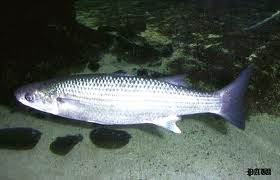
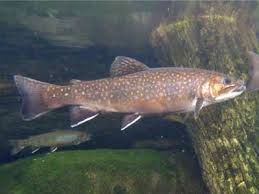
Some of the more familiar secondary consumers are the pin fish, speckled trout, juvenile blue fish, croaker, flounder, gray trout, jumping mullet, hog fish, sheepshead, and more.

pinnngf crookerr Flounder) images (1) images (2) images (3) images (10) speckled  trout
“These are the consumers I like to consume,” said Harriett. “Speckled trout is my favorite.”

Posted in Ospreys | Leave a comment

Primary Consumers – Meiofauna, Filterfeeders and Deposit Feeders

Detritus is where the energy lies.  It has been captured from the sun.  Energy hungry animals can’t wait to take a bite.

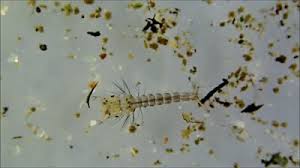
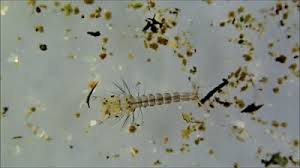
Meiofauna are microscopic invertebrates that live between sediment grains and feed on detritus, bacteria, and protozoans.  The term “meiofauna” loosely defines a group of organisms by their size, larger than microfauna but smaller than macrofauna, rather than a taxonomic grouping.

download (3) download (2) images (3) images

Filterfeeders 

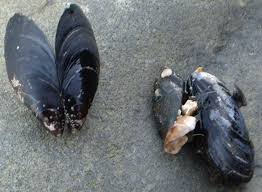
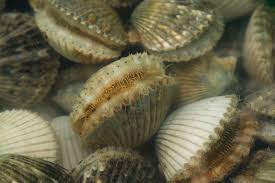
Bivalves are mollusks. They possess two shells which hinge at one edge and can be closed tightly when threatened or out of the water. They are filter feeders gaining nourishment by filtering tiny organisms and digestible debris (detitus) from the water. Some are sedentary, attaching themselves to a substrate (oysters, mussels), some burrow and move around on the bottom (clams) and a few can swim (scallops).
clamms mussell                                                    images (3) images (19)
Mollusks are the largest marine phylum, comprising about 23% of all the named marine organisms

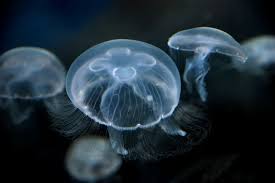
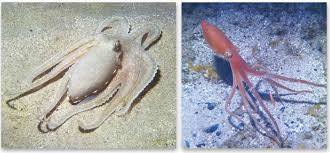
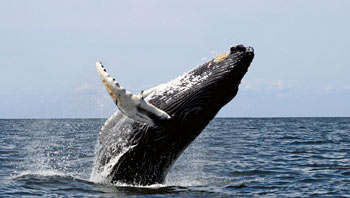
Here are some more examples of North Carolina filter feeders:

bbbb images (9) jjjjjjjjj fff cccccccc images (7)humpback_whale_1

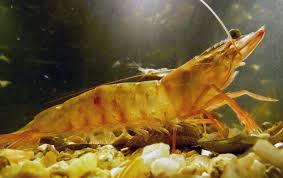
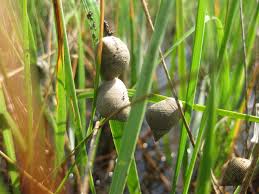
Deposit feeders such as polychaetes (read worms), amphipods (read shrimp), and snails utilize a wide range of foods including decaying plant material, bacteria, protozoans, diatoms, fungi, and meiofauna.

images (1) ssssnails

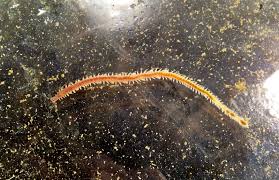
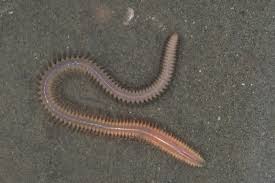
One of the major primary consumers are the Polychaetes.

images (5) images (8)                          images (1) images (6)

“Personally I don’t like them.  As a mater of fact just thinking about them gives me the creeps and kind of makes me sick.  But the wadding birds love them.  Gourmet dining, they say.”

images (1) images (2)  images (16) images (11) download (1)

“And just think,” said Harriett.

“All of this from sunshine and the marsh cord grass.”

“But what is even more amazing, we haven’t even scratched the surface of the food chain.”

“Sometimes it’s hard for me to comprehend why I should be at the top.”  This is one of the mysteries for the Doctor and me to discuss.”

As always, with love,

Harriett


Posted in Ospreys | Leave a comment

Detritus

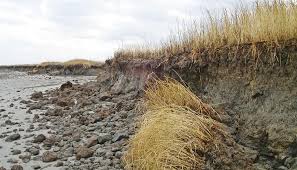
Salt marshes are marshy because the soil is composed of deep mud and peat. Peat is made of decomposing plant matter that is often several feet thick.  The salt marsh life cycle may have been undisturbed for hundreds of years.

download (1) images (3) images (4) images (1)
The soil of a salt marsh

Peat is waterlogged, root-filled, and very spongy. Because salt marshes are frequently submerged by the tides and contain a lot of decomposing plant material, oxygen levels in the peat can be extremely low. The growth of bacteria under condidions of low oxygen produce the wonderful aroma that is associated with marshes and mud flats.

download (1) download (2)  images (5) images (10)                                     images (1) images (4)
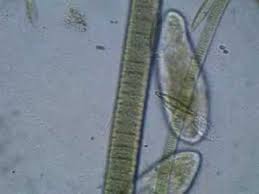
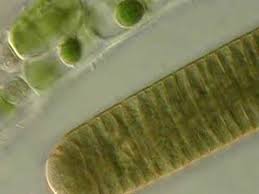
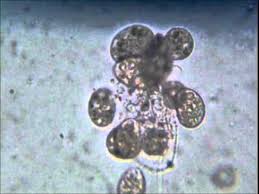
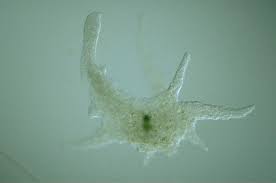
Microorganisms of the salt marsh. Can you distinguish the bacteria form the fungi from the algae, protozoa?

Detritus
noun, de·tri·tus
1. any disintegrated material; debris.

In biology, detritus is dead particulate organic material.  Detritus is typically colonized by communities of microorganisms which act to decompose the material.

images (1) images
See the primary consumer?

What’s next in the food chain?

Posted in Ospreys | Leave a comment

Triple O and the Sun

Omnipotent Omnipresent Omniscient

“The sun god (Ra – Egyptians, Helios – Greeks, Mithras – Persians, Apollo – Romans, Huitzilopochtli – Inca) takes charge every day,” said Harriett’s great, great, great, great, great… grandfather.

Harriett knows because of her epigenetic memory.

“Let them believe what they want,” quipped Triple O.  “I put it there for their speculation.”

“I also put over 100,000 million stars in this little galaxy (Milky Way) and about one fourth are similar to the sun.  BTW, I’ve also created over 1 billion galaxies.  And that is just in the observable universe of H. sapians.  The parts of the universe H. sapians have yet to see hold some nice surprises.

“Come on Triple O,” remarked Harriett.   “Stop taunting us.”

Energy from the Sun powers all life on Earth.  It comes as electromagnetic radiation. The energy comes in the right amount, shape and form; not too many X-rays, radio waves, IR or UV waves.

Visible light is just right.

images

“I like visible light,” said Harriett.

The atmosphere takes out most of the harmful radiation before it reaches the ground. The ozone layer in the lower stratosphere is especially important in protecting living things from UV exposure.

“I put the atmosphere there too,” teased Triple O.

Plants (marsh grass) use this energy to make plant matter by photosynthesis.

images (2)

The plant matter (marsh grass) dies in the winter and the food chain begins.

The Food Chain……

Posted in Ospreys | Leave a comment

The Salt Marsh 2

The Salt Marsh
images (18) 050“There’s nothing like a Spring salt marsh,” remarked Harriett.

“The first thing you should know about our salt marsh is that it is self sustaining.”

Marine life in salt marshes is incredibly diverse and abundant. Salt marsh species rely on the decay of marsh plants to supply a steady source of food in the form organic material, or detritus, resulting from the decomposition of plants and animals.

Most marsh plants flourish in the spring and summer, growing taller and more abundant. In the fall, they begin to decay and are distributed in the marsh where they become the first level of the food chain.

Bacteria, algae, and fungi decompose the Detritus resulting from salt marsh plants. These microorganisms and the remaining decomposing plant material become an ideal source of food for bottom-dwellers like worms, fishes, crabs, and shrimps.

Detritus
noun, de·tri·tus
1. any disintegrated material; debris.

Posted in Ospreys | Leave a comment

Back Porch Photos 2

Sorry about the camera going out again but the Doctor is working on it.  He will be certified IT crazy before all this is done.  It’s not the hardware connection this time. The glitch is somewhere in the software connecting our camera’s IP address to the Internet. But don’t worry, he will figure it out.

download
The Doctor thinks

The Doctor looked behind his desk.
DSC_0003
It looked like Medusa was taking a nap back there

“I’ll just have to think some more,” thought the Doctor .

download
Thinking some more

What is more important now is life on planet Earth.


I think he can give you a glimpse of life on planet Earth with his words and pictures.

Please remember, the Doctor wants to consider himself at least a novice photographer and writer, so be careful not to hurt his feelings.

A few more backyard photos:

2 DSC_3372-Editcopy DSC_3374-Editcopy DSC_3380-Editcopy DSC_3390-Editcopy DSC_3389-Editcopy
Pictures taken by the Doctor’s friend, photographer Joe Ring

The Doctor can do better once he learns how to use his new photo editing software, but right now that priority is far down his list.

Harriett Raptor


Posted in Ospreys | Leave a comment

Isaac the Incredible Ibis

 May 16, 2015

1 3 4 7 (2) 8 9
Harriet broods comfortably and observes the Doctor.

“I see the Doctor on the back porch of his giant nest almost every day. He has that camera set upon a tripod that he moves back and forth from one side of the porch to the other. Osprey friend #42 is an amateur photographer.  He spent the weekend with the Doctor several weeks ago and set the gold standard for bird photography.”

20150516_153836

“It is rare these days that the Doctor forgets the lens cap, battery and chip, that’s not to say he still does it on occasion. Now he’s trying to figure out why the flash sometimes pops up in broad daylight, why the shutter will not release when he presses the button, what all these other buttons and knobs and dials and switches are for, and why his pictures are not as good as Osprey friend’s #42.”

“I know he’s still a novice but I’ve encouraged him to show you some of the pictures anyway.”

Ibis 02 Ibis 01  ibis 8 (2) Ibis 9 (2) ibis 4 ibis 3) Ibis 10r Ibis 34

“I like fiddler crabs,” said Isaac the Incredible Ibis.

More to come……

Posted in Ospreys | Leave a comment