The Taj Mahal

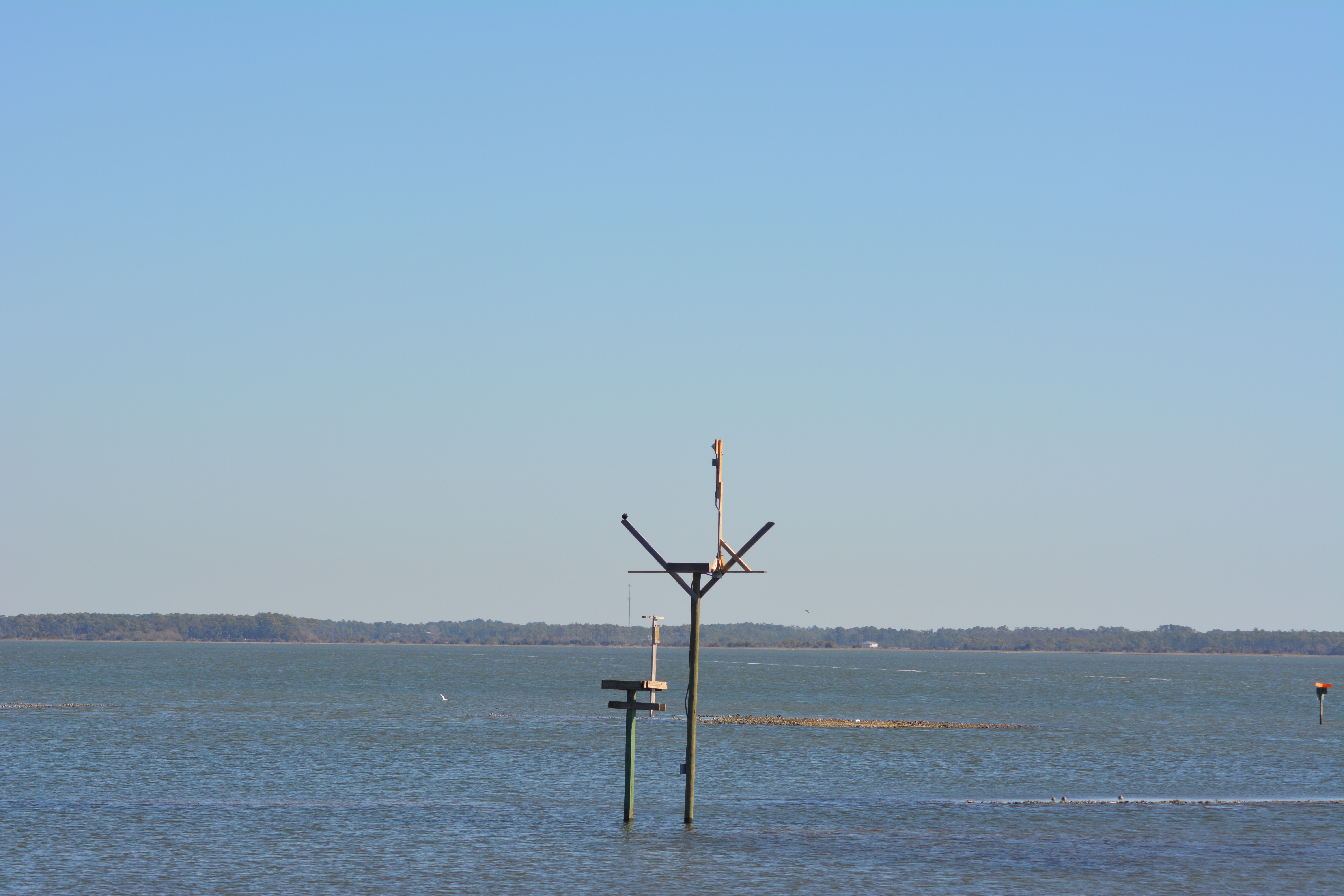
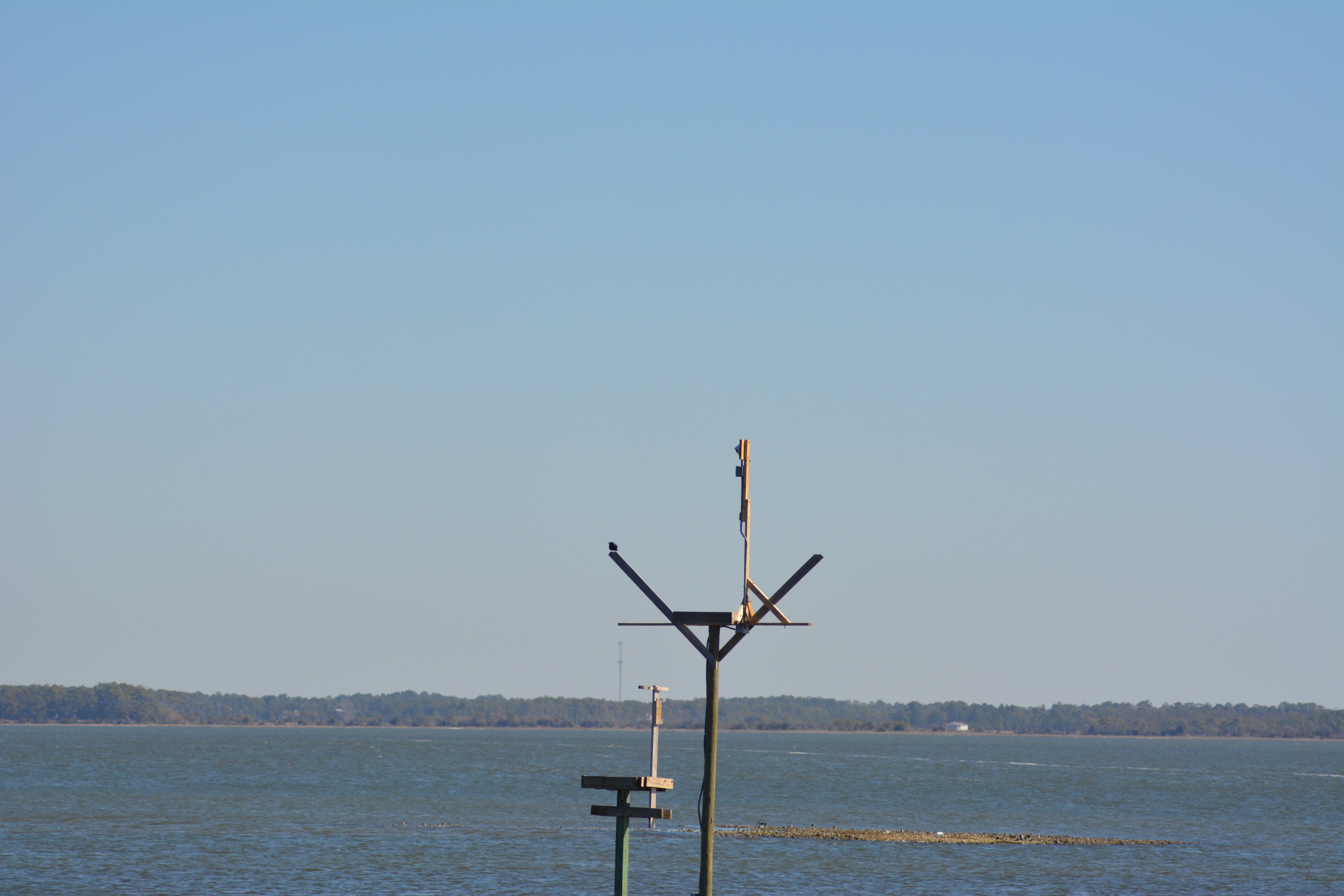
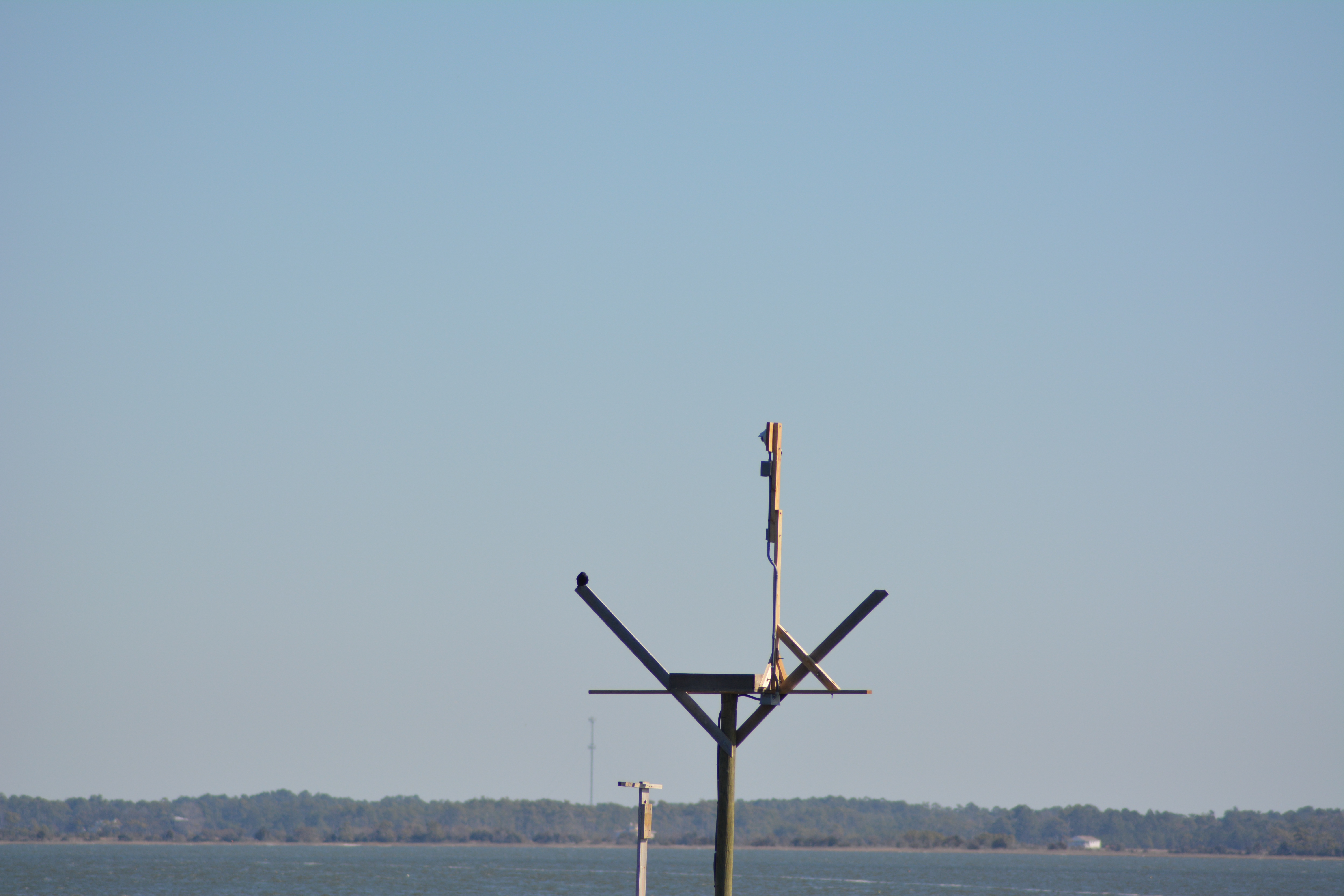
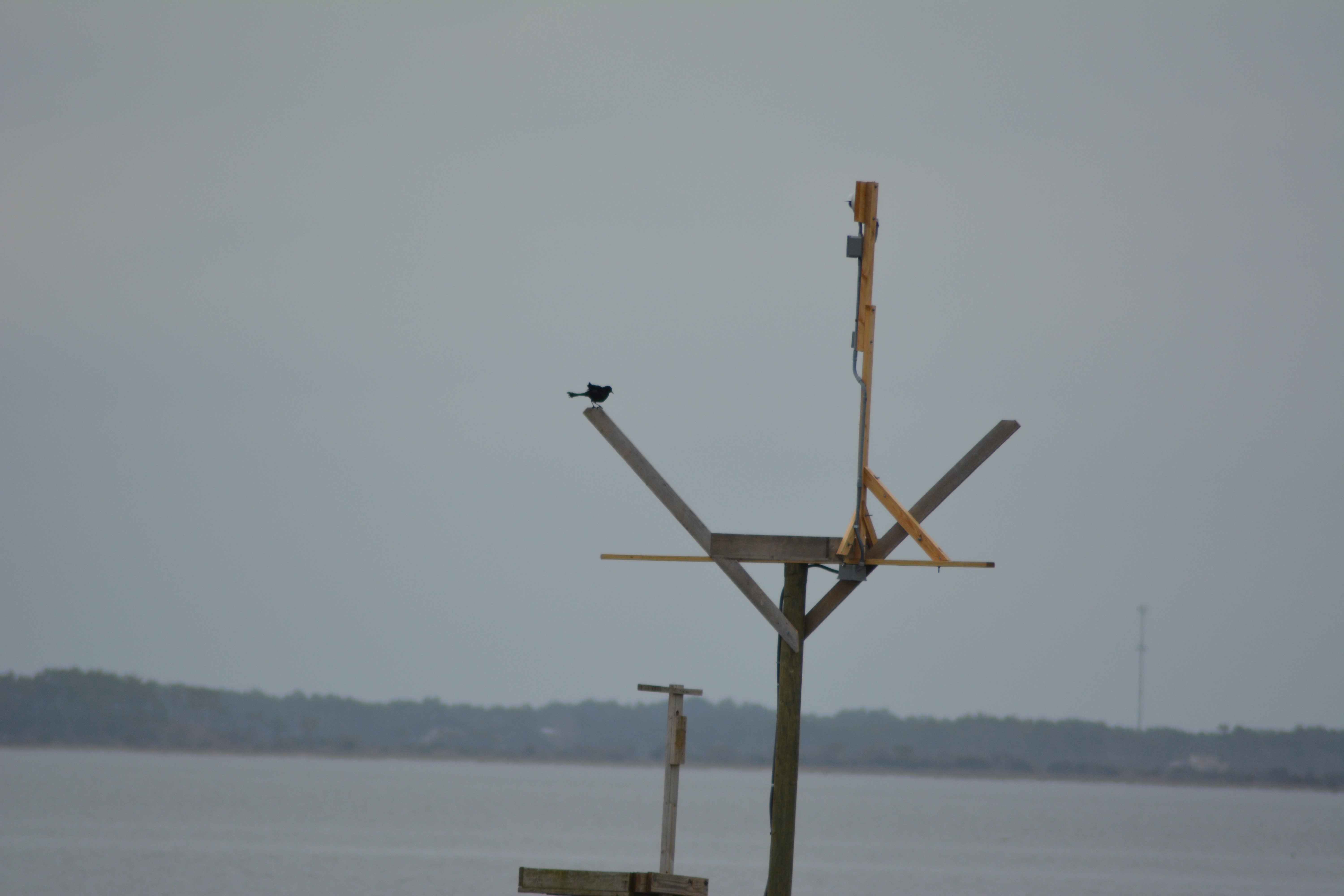
I don’t care what you call it, but I call it the Taj Mahal.

The Doctor has gone to great lengths to provide us with comfort and, may I say, an opulent,  breeding home. Not preposterous, not pretentious, not supercilious, or ostentatious.  The new Osprey platform is state-of-the-art with all the comforts of home. I would have expected nothing less from the Doctor.

DSC_0047 DSC_0040 DSC_0038 DSC_0035 DSC_0027

Look at the top of the 9 foot spire.  There lies the 3618-e Axis, 9 mm, 38 pixil, night/day, CRT – earth link,  web camera, the Doctor’s pride.

Posted in Ospreys | Leave a comment

Ozzie spent his Winter

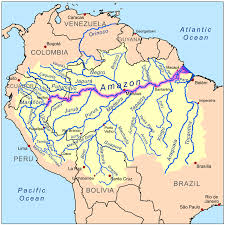
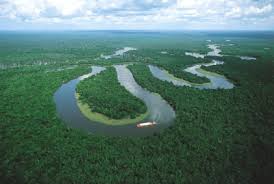
Ozzie spent his winter cruising up and down the Amazon River.  The Amazon River cuts a path across the continent of South America; it makes its way through Brazil, Colombia and Peru. More than one third of the world’s animal species live in this vast River Basin / Rain Forest.

images (1)

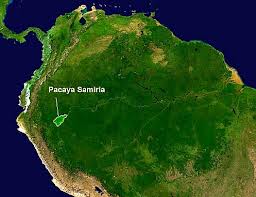
Ozzie spent most of his time in Peru’s Pacaya-Samiria National Reserve. It is  about 100 miles southwest of Iquitos.  Iquitos, linked only to the outside world by air and by river, cannot be reached by road. It’s a jungle metropolis teeming with the usual and  inexplicably addictive Amazonian anomalies.

images (3)  images (2)

Unadulterated jungle encroaches beyond town. Mud huts and dugout canoes lead the way to the floating shantytown of Belén

floating shantytown of Belen

For H. sapiens one of the major ‘attractions’ in Iquitos is the neighborhood of Belén. However it’s also considered the city’s most dangerous neighborhood, and guidebooks do not advise visiting here without a guide. Due to the abject poverty present in Belén, a tourist seen to be carrying a bag (and therefore money and a mobile telephone) or a camera, or anything of value would be seen as an easy target for the residents of Belen.


Posted in Ospreys | 2 Comments

Harriett’s Wintering Ground

The Santo Antônio Dam is a hydroelectric dam on the Madeira River. It is part of a planned four power plant Madeira river hydroelectric complex.  The Madeira river hydroelectric complex is part of an effort by South American governments to integrate the continent’s infrastructure. The estimated cost is $25 billion.

Because the Santo Antonio dam is a run-of-the-river project, it does not impound a large reservoir. However, the reservoir that has been created is ideal for wintering osprey. Remember Lake Maracaibo? A century ago? Lake Maracaibo was a similar, although much larger wintering ground for the North American Osprey.

images (6)

The Santo Antônio reservoir provides wide expanses of shallow, fish-filled water. It has been estimated that there are more than 900 fish species in the Madeira River Basin,[9] making it one of the richest freshwater systems in the world.[10] The vast Amazon jungle surrounds the reservoir, allowing birds to congregate on the canopy. They socialize, catch up on the latest and dive for a snacks on a whim. The trees along the bank are especially tall, protecting them from ground predators. The weather stays a balmy 75 – 78°.  There is always a lot of excitement down at the water’s surface.

It’s like the Lake Maracaibo Paradise 100 years ago.  Most of our readers know what became of the Lake Maracaibo Paradise. It’s a sad story and I certainly will not repeat it now.

Impacts [edit]

Brazilian law requires water impoundments to undergo a very thorough approval process to ensure that each project meets environmental, social, political, and safety criteria. However, critics of the Santo Antonio dam claim that many legal criteria were rubber-stamped before all questions from impacted groups had been addressed.[8]

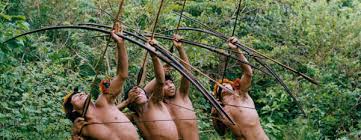
The most frequent objection is that the dam builders failed to adequately consult with indigenous peoples, as required by law. The Brazilian government indigenous protection foundation FUNAI predicts that there may be un-contacted indigenous populations in the region that will be affected by the Madeira complex.

The Fakawi tribe were originally part of this controversy. However the Brazilian government was able to procure 100,000 acres of grassland 50 miles north of the Dam.  The height of the grass there never exceeds 2 feet. The tribe accepted this reserve and feel that the Brazilian government dealt with them fairly.

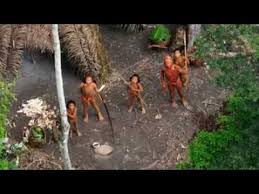
Not so, the Watsamata tribe.  Every time the government tries to document their existence they are fired upon. In an attempt not to disturb their native habitat the area can only be observed by air.


                                                                               images (5)                     

                                                                    images (4)

                                                                                 Skullls

Posted in Ospreys | Tagged | Leave a comment

The Santo Antônio Dam

 download

Harriet has left her South American wintering ground. As you read these words, she is in mid migration. She will travel over 2000 miles in the next 2 weeks anxiously, excitedly, anticipating arriving behind the Doctor’s giant nest to see what she knows is the Doctor’s latest effort to provide her with the best of all nesting sites.

This was her 2nd winter at the Santo Antônio reservoir. She thinks she’s found a nice spot to which she will return.


Posted in Ospreys | Leave a comment

The Beginner

The Doctor had “BEGINNER” written across his forehead. He ran to the bathroom mirror to see if it was so; and it was so. Like a flashing strobe light, it hurt the Doctor’s eyes, and you know he didn’t like it. He didn’t like it at all.  In fact, it was a terrible embarrassment and troubled him very much.

He tried wrinkling his forehead, tilting his head at different angles and changing facial expressions. Nothing could diminish the stigma. It was like a skin lesion that is diagnostic of a sinister disease, and it was there for any and all to see.

One day, Zeus got tired of the Doctor’s timidity.

“DO SOMETHING ABOUT IT!” Thundered Omnipresent Omnipotent Omniscience. (Triple O to Her friends……. The British like to call Her Double O Zero). A lightning bolt slammed into the ground not 20 yards from the Doctor’s giant nest on the North River.

It frightened the Doctor very much. He didn’t know what to do. But then miraculously as if his guardian angel were there, a soothing, reassuring voice whispered into his left ear. It was from Lieutenant General Ring.  “It’s in Watson’s book, Play of the Hand, the voice whispered.

“Oh, thank goodness,” thought the Doctor. “A place to start.”

“Come on to bed now,” call the female H. Sapien that lives with him in his giant nest on the North River.  “We both had big days ahead of us tomorrow.”

The Doctor got up, but the draw of Watson’s book was too powerful.  It pulled him back into his office and sat him down at his desk.

“Squawk,” I screamed at him with all my telepathic strength. “What’s more important, your work or this card game you play?”

I waited for a long time, but there was no answer.

Very concerned,

Harriett

Posted in Ospreys | Leave a comment

The Deadly Raptor Talon

O talonsmd

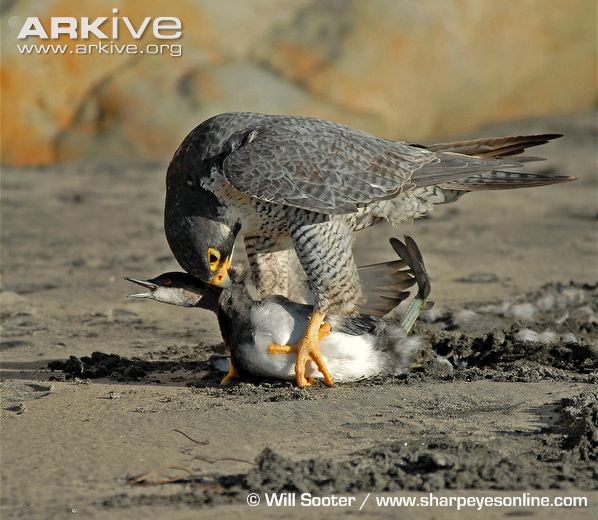
Raptors use a wide variety of killing strategies, including a few rather grisly ones. Some raptors use their talons to attack with high-speed killing blows, while others suffocate their prey to death in a constricting grip. Some give their victims the merciful death of a broken neck, but others eat their victims alive after slashing them open.

The diurnal birds of prey:

Falcons

Hawks, eagles, buzzards, harriers, kites

Osprey

Secretarybird

All raptors use their talons in a similar way when tackling small prey; their feet imprison the victim, with talons deployed as a cage rather than as weapons. Falcons then use a notched ridge on their upper beak to sever the spine or crush the head, while owls sometimes break their prey’s neck with a swift twist.

Falcons

Pergrine-falcon-ssp-tundrius-delivering-killing-bite-to-neck-of-eared-grebe-prey   falcon+09_pic+04

 Eagles

Eagles talons

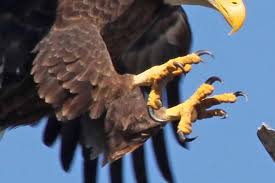
Accipitrids (eagles, hawks, kites, harriers, and the like) have weaker bites than falcons so they use their feet to constrict their prey, cutting off the air supply much like pythons use their coils.

Owls

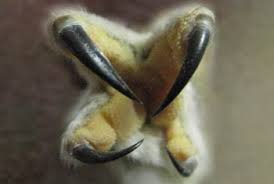
Because owls tend to ambush their prey on the ground, their chances of landing a killing blow are slimmer. Their feet have evolved to better restrain struggling prey. Their toes are shorter and stronger than those of other raptors. One toe can swivel backward to join another so the owl can grip with two pairs of opposing talons. That makes them powerful constrictors, capable of crushing small animals in a suffocating “fist.” It also means they specialize in smaller victims, rarely tackling the larger prey that falcons and eagles hunt.

Owl talon

Ospery

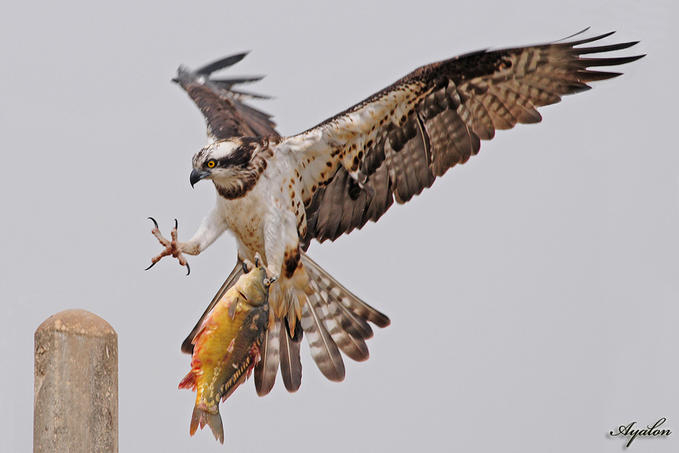
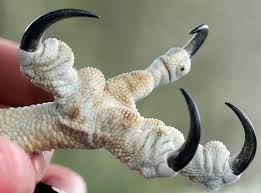
The osprey differs in several respects from other diurnal birds of prey. Its toes are of equal length, its talons are rounded, rather than grooved. The osprey and owls are the only raptors whose outer toe is reversible, allowing them to grasp their prey with two toes in front and two behind. This is particularly helpful when they grab slippery fish.

download (5)

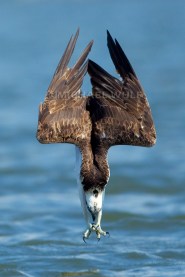
Osprey Dive dive8 Osprey diving with wings folded, head first and at the last second thrusting its talons downward into the water. The osprey is the only raptor that will ..

You do not want to be the fish this osprey has spotted.


Posted in Ospreys | Leave a comment

New computer

download

The Doctor bought a new computer to observe our time behind his giant nest this year. It was made in China and it is called Tianhe-2. However, the Doctor likes to call it “heavenly River or Milky Way.”  He calls it his supercomputer and won’t let anyone fool with it except himself.  It can perform 33.86 petaflops (quadrillions of calculations per second) With 16,000 computer nodes, each comprising two Intel Ivy Bridge Xeon processors and three Xeon Phi chips.

The female H. Saipan that lives with him in his giant nest on the bank of the North River was not happy about the purchase.  She tried to cancel the credit card transaction, but the Chinese government would have nothing to do with that.  Anyway, the Doctor is happy, even though he dipped into their retirement savings.

tianhe-2-jack-dongarra-pdf

Posted in Ospreys | Leave a comment

Migration North Spring 2015

“Can’t wait to get home.”

Well, here I stand on the Pueblo Nueva Peninsula of Venezuela. Several other Osprey are gathered here too. There are the young, middle aged and the older/wiser.

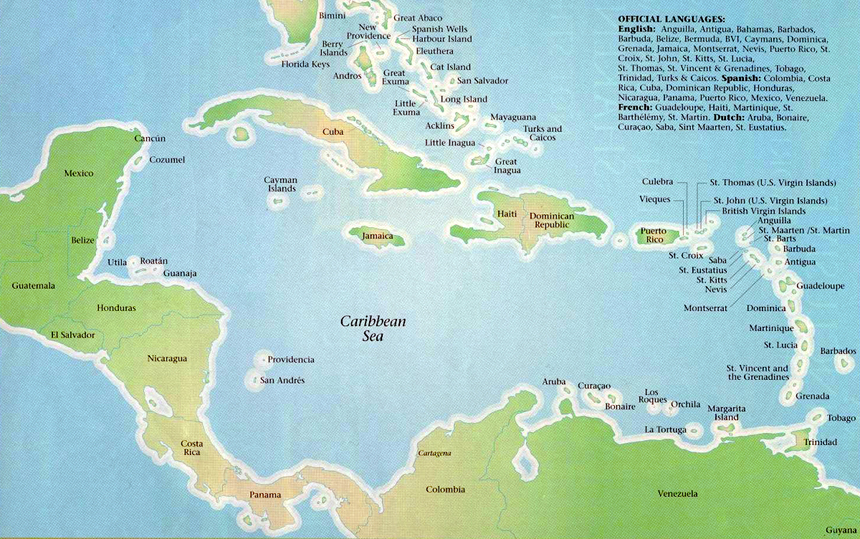
The Caribbean Sea

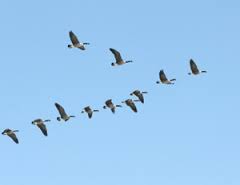
We assess each other, hoping to find a strong, experienced leader; one that can lead a skein across this never ending body of water. I want to be part of that skein. Crossing the Caribbean Sea is the hardest part. We’ll have to fly straight through and hope to spot San Juan or Santa Domingo in the next 36-48 hours.

download (5)

Wish me luck.
I can’t help but think of Ozzie’s experience last year. He almost perished following that fool friend of his that led the skein far out into the Atlantic Ocean never to be seen again. I think that guy’s navigational instincts had been damaged by a winter of berry juice and cocoa beans. That old buzzard had his half-witted entourage bring him fish during the winter of 2014. To read more about this harrowing experience check out The miracle.

Posted in Ospreys | 2 Comments

Osprey distribution

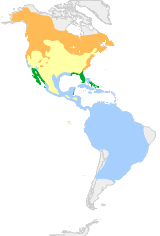
119196Take they look at this map. The orange area is where we breed. The blue coloration is the area to which we migrate. Some of us stay locally year-round. These areas are colored in green.

In South America we are termed “non-breeding migrants”.

Posted in Ospreys | Leave a comment

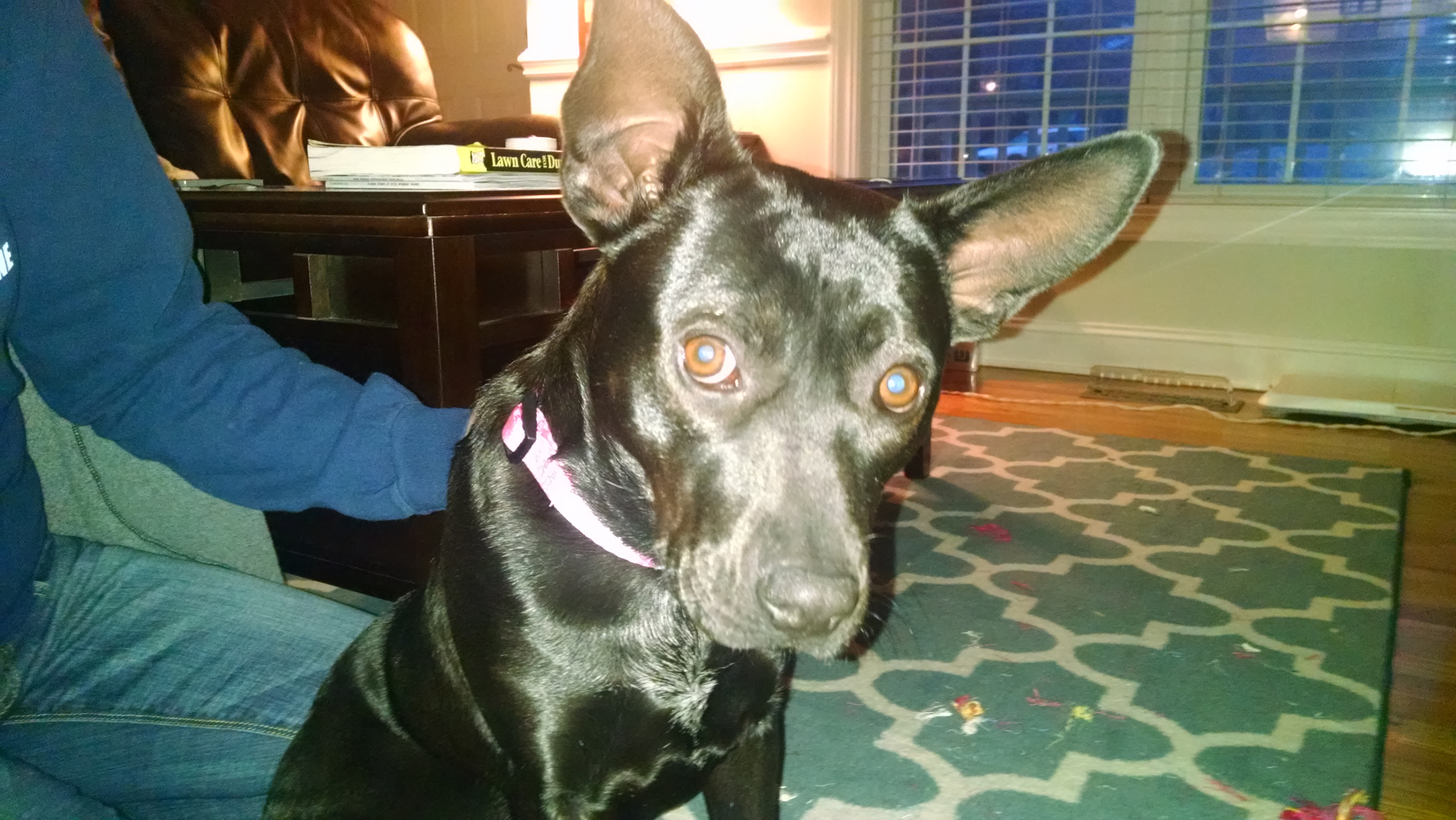
Man’s best friend

Cleo, Marley and Daisy.

th (3)    digging(1)


Daisy

Marley, Cleo and their friend Daisy spent the weekend hunting for gremlins. You may remember last year; gremlins were quite troubling.

th (6)  th (7)

Not only did they disrupt the image by chewing through the coaxial cable, but somehow they made the live camera stream difficult to view from the Internet.

“The Doctor will have none of that this year,” said Harriett emphatically. “He has recruited Marley, Cleo  and their friend Daisy to scour the premises for the least evidence of gremlins.

“Arf!” Said Marley. There are no gremlins out here.”

“Arf, Arf!” Agreed Cleo.  “No gremlins to be found.”

And find them they would, if they had still been hiding in the marsh.  Gremlins have a very distinctive odor, not pleasant if I might add. Any dog with a respectable snout can root them out.

“The area is secured Doctor,” barked Daisy.

Posted in Ospreys | Leave a comment