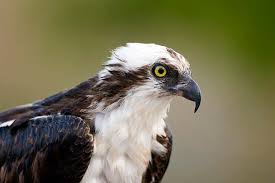
Sky Dance

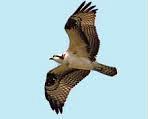
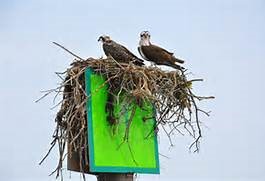
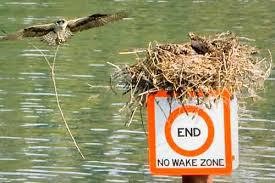
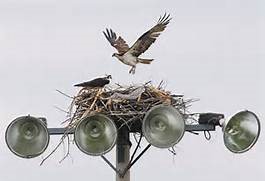
Ozzie’s sky dance was almost perfunctory this year. Already he has won me over, has my heart, and he knows it. Unfortunately, he also knows I’m crazy in love with him. He hasn’t put on much of a show this year since, but we both know it is not necessary; I know he loves me too.

However, compare that to last year, and the year before that and that!  Whew!

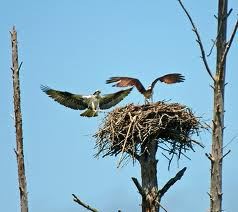
Those first few years, he really put on a show. While trying to impress me, Ozzie can fly directly up, over the remnants of our old nest and put on an aerial display unequaled to any other.


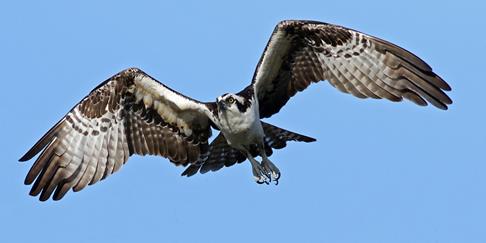
When he is really in the mood, Ozzie can fly straight up 600 feet or more at great speed, beating his wings rapidly, often carrying a fish or piece of nesting material. At that height he hovers five, maybe ten minutes, with his tail fanned and talons dangling. Then he dives like a rocket down varying distances and quickly ascends to repeat the hover-dive senerio several more times. He usually screams out “creee” or “cheeerk” as he performs.  It fills our territory, alerting any other suitors to beware..

sky dance 1  sky dance 2

Sometimes Ozzie the will catch a huge flounder or trout and fly circles around our nest. “Cree! cree!”, he calls attention to himself. What a braggart! I can’t blame him though. He is the most expert fishermen, far and away, up and down the Atlantic sea coast. And he’s not modest about it either! He is an unabashed, cocky, show off when he boastfully dances in the sky.  But hey, it’s a lot of fun and providing plenty of food is the sort of thing I like in a mate.

Posted in Ospreys | Leave a comment

How to connect to the cameras

Great News!
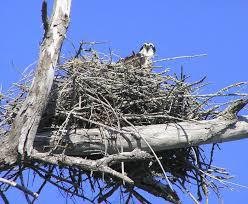
The cameras are up and operational. If you want to follow Ozzie and me, go to the blog page and “Subscribe by email.” The link to the cameras are just below the “Subscribe by E-mail”. You should be able to get to the Blog page anytime from https://ospreytaleteller.com/

The cameras are there, so is the story.
Wish me good luck! I love you all.

Harriett O. Raptor
Doctor’s Platform
North River Carteret Co. NC
Latitude: 34.7286515079363
Longitude: -76.6212389981747
hc.merrick@vitalsignsnc.com

Posted in Ospreys | 1 Comment

Migration Threats

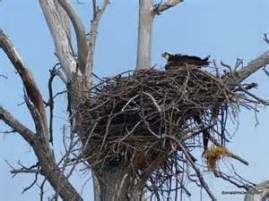
Many H. sapiens don’t realize how perilous migration can be for birds.  They just chalk it up to something we do and go about their business. Bird migration is usually not even on the minds of modern-day H. sapiens.  But, I want to tell you, there are many deadly threats along the way. Here are a few of the dangers my species and I face twice a year:

  • Exhaustion: We fly hundreds of miles during migration, often covering large distances without rest. Exhaustion can make us less wary of potential threats, and tired birds are more apt to collide with obstacles or falter in flight. This is especially true if the birds’ flight path passes through storms or unfavorable wind patterns, or if we are migrating later in the season and must cover more ground each day to reach our destination.
  • Starvation: Inadequate food supplies cause starvation among many migrating osprey every year. This can be caused by habitat destruction that effectively strands us without food along our route, or it may be a result of greater feeding competition among large masses of other migratory birds.
  • Collisions: Many of us collide with obstacles in mid-flight during both spring and fall migrations, and the majority of these collisions cause fatal injuries. Even if we are not killed on impact or from our injuries, stunned we are more susceptible to predators. The most common obstacles that are hazardous to migrating osprey include tall buildings, electrical wires and poles, wind turbines and similar structures. Birds that migrate at night are more likely to collide with lighted windows or other light sources. We don’t fly at night.
  • Predators: Predators kill many of us each year. During migration, we are often unaware of local predators at stopovers during our journey.
  • Disease: When migrating birds gather in large flocks, a disease outbreak can be devastating. This can be even more detrimental when surviving birds carry the illness to either breeding grounds or densely populated winter ranges, when more birds may become infected and the overall population can be decimated.
  • Pollution: Pollution such as lead poisoning, oil spills and DDT is not only harmful to locally affected birds, but to migratory birds as well. Polluted habitats provide less food, and birds that ingest toxins during migration may continue to suffer from the poisonous effects longer after leaving the area. Furthermore, heavy pollution will reduce available food supplies and suitable habitat, making it more difficult for birds to complete their migration successfully.
  • Natural Disasters: Hurricanes, blizzards, wildfires and other natural disasters can destroy crucial stopover and rest sites as well as destroying food sources birds need to refuel along their journeys. Osprey that are caught in these disasters can suffer other effects that cause injury, debilitation or death, such as singed feathers in a wildfire or freezing in an early or late blizzard.
  • Hunting: Many hunting seasons coincide with migration periods, making this perilous time even more threatening for birds. Illegal hunting and poaching are also a threat at this time, and even legitimate hunters may make mistakes and inadvertently shoot an osprey that they have misidentified in flight.
  • Inexperience: An osprey’s own inexperience with migration can be a great threat to its success and survival. Many juvenile birds make these long journeys without guidance from adults, and they may not be able to complete the trip if they are unsuccessful in finding adequate food or if they stray too far from the typical migration route. Straying far off course is a death sentence for a young osprey.

I have made this round trip seven times and I’ve seen more than I want to have seen.  I can give you many specific events/tragedies, but it is all very depressing. I must keep my spirits up until I get home. I can’t wait to see Ozzie; I really love that bird. It will be nice to be near The Doctor too.  He always has something interesting to discuss, and he likes to tell me how his winter months have been.”

Harriett sketch

Harriett O. Raptor

Doctor’s Platform

North River Carteret Co.  NC

Latitude:                34.7286515079363

Longitude:             -76.6212389981747

hc.merrick@vitalsignsnc.com
Posted in Ospreys | 2 Comments

Harriett O. Raptor, S.A.V.A.N.T.

harriett Selfie1                                                                  Harriett O. Raptor

8-year-old mother of five, lifelong mate of Ozzie Raptor, fluent in telepathy with The Doctor and possessor of genetic memory.  She is an intellectual, a scholar, philosopher and thinker; a wise, learned osprey especially distinguished for her expertise on the H. sapiens problem.

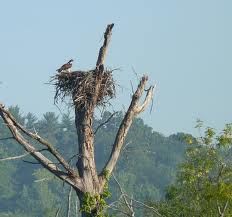
Ozzie is Home

“Wow, I can’t believe it! Ozzie’s already there? My goodness, I’m way behind. One moment please……….

Ah ha!  You are right. I better get a move on.  Heck, I haven’t even gotten to the Caribbean Sea.

“I sense the doctor is distressed about something. Is he having pain? Perhaps in his right knee? Or is it he just has not gotten the cameras working yet. He’s hard to read some time when he’s not telepathically engaged.”

Harriett sketch

Harriett O. Raptor

Doctor’s Platform

North River Carteret Co.  NC

Latitude:                34.7286515079363

Longitude:             -76.6212389981747

hc.merrick@vitalsignsnc.com
Posted in Ospreys | 1 Comment

2016 – Getting Started 2016

safe_image
Harriett Raptor

This is Harriett’s third winter at the Santo Antônio Dam reservoir.  Do not consider her a juvenile anymore.  She has become one remarkable bird, fully capable of the challengers before her.  At this time in her life she is entirely unaware of her, and The Doctor’s, destiny.

“This place is great!  I’ve made several good friends down here in Brazil. They have also found the Santo Antonio Dam Reservoir to be a super wintering ground. It’s almost like Lake Maracaibo,Venezuela in the old days; back in the 1950s and 1960s. The Reservoir lacks all the excitement of the Catatumbo Lightning, marvelous fishing and of course all the yearling’s flirting, giggling, festive gaiety.  It is a darn shame what the H. Sapiens of Venezuela did to our pristine, idyllic lake. But that’s a thing of the past. Nothing can be done about it now.”

“Some of the guys here at the reservoir are young and really strong. This will be my seventh migration north, if you recall. I hate to admit it, but I really want to be part of a strong skein this year.  My days of flying lead may be coming to an end. We will be leaving tomorrow, so I should be seeing you all in about two weeks.”

Harriet can’t wait to leave her South American wintering ground; all she can think about is Ozzie and The Doctor.  She will travel over 2100 miles in the next 2 weeks excitedly anticipating her arrival at the Taj Mahal.

Hariett’s telepathic abilities with The Doctor have become extraordinarily keen. Distance is no longer an obstacle; the two of them have been communicating all winter, but have been quite mum regarding their thoughts.  The Doctor has been busy trying to surprise her, but Harriett has become so good she can practically read his mind.  She already knows about the new camera and the cadre of new followers, but still, she will be in for a few surprises when she gets home; that is, if she survives the crossing.

“Yeah, yes, yes. I know the trip is dangerous and full of the unexpected. But remember, this is my seventh trip north and I’ve learned to expect the unexpected. I’m pretty sure I can be a valuable member of any skein I join. Plus, like I said, I’ve met a lot of young healthy strong Osprey this year and I’m sure we will be traveling together.  The need to breed has struck us all.  Everyone is ready and raring to go.”

Love,

Harriett sketch.jpg

Harriett O. Raptor

Doctor’s Platform

North River Carteret Co.  NC

Latitude:                34.7286515079363

Longitude:             -76.6212389981747

hc.merrick@vitalsignsnc.com
Posted in Ospreys | 2 Comments

Quantum Biology and Navigation

Given the extraordinary distances over which birds migrate, it is absolutely essential that they have precise navigation skills. Failure to find a place to land, rest, and/or feed will nearly guarantee a wayward bird’s death.

“It’s not just us,” said Harriett.  “One-fifth of Earth’s 10,000 bird species migrate over great distances, crossing insurmountable obstacles as they follow the seasons and their instincts.
The Doctor is delighted.  Harriett is finally sharing her knowledge with him.

“How do we navigate? I will tell you.”

“Yes”, said the Doctor emphatically. “I need to know.”  But then he paused, “or at least, I want to know,” he said sheepishly.


download

Harriett

“I can see the Earth’s magnetic field.  I have special molecules, proteins, called cryptochrome in my retina. They are light activated and create entanglement. You don’t realize it, but  quantum mechanics are part of the fundamental laws of the living cell.

One of the most perplexing interactions in the realm of physics is Quantum entanglement.

download (2)

“Kiss,” said the Doctor.

For those uninitiated into the world of quantum physics, entanglement basically describes two electrons that are inextricably linked. Any time you subject an electron to a magnetic field, you affect its “spin.”  However, if that electron is entangled with another, then any time electron “A” changes its spin, electron “B” will react as well, even though it was never subjected to the magnetic field. This is a concept that dates back to Einstein, who famously described it as “spooky action at a distance.”

As difficult as entanglement is to believe, it is a well-established property of quantum mechanics.”

“We figured it out way before H. sapiens even considered the concept.  Migrating birds have built in compasses and GPS is in their brains, and their eyes, and in their beaks.  They use quantum mechanics to find where is South.”

“But why South?  South where?” Asked the Doctor.

“South America.”

The Doctor

The Doctor paused. He said back in his chair, interlocked his fingers, rubbed the tips of his thumbs together. He contemplated Harriett’s words. He reflected deeply on Harriett and the subject.  “Harriett’s can be whimsical,” the thought.

“You’re making this up, aren’t you.”

Harriett ended the telepathic session without further comment.

images (4)


Posted in Ospreys | Leave a comment

Navigation

images

Migrating birds can cover thousands of miles in their annual travels, often traveling the same course year after year with little deviation.

First-year birds make their very first migration on their own. Somehow they can find their winter home despite never having seen it before, and return the following spring to where they were born.

The secrets of their amazing navigational skills aren’t fully understood, partly because birds combine several different types of senses when they navigate. Birds can get compass information from the sun, the stars, and by sensing the earth’s magnetic field. They also get information from the position of the setting sun and from landmarks seen during the day.

Harriett has finally agreed to tell us about Quantum Biology.  “Nature figured it out first,” she teased the Doctor.


Posted in Ospreys | Leave a comment

Zugunruhe

“Something’s not right,” said Jesse.

Abigail had the same feeling.  She felt a restlessness, a need to move.

“Where the heck is everyone, anyway?”  She continued.

images (1)

David was picking apart a speckled trout, oblivious to the conversation.  Abby turned to look at him.  She noticed he was getting fat.

“Maybe he’s smarter than we think,” she thought.

“It’s Zugunruhe, said Jesse.

Zugunruhe is a German compound word consisting of Zug (move, migration) and Unruhe (anxiety, restlessness).  In ethology it describes anxious behavior in migratory birds during the normal migration period.

“We’d better get a move on,”continued Jesse

“Move on to where?” rejoined Abby.

“I don’t know,”  Jesse retorted. “But I do know we have to start flying south.”

David looked up from his fish. He has gotten conspicuously overweight over the past 4 weeks.  He looked at his brother and girlfriend and could see that they were having a serious conversation.  Serious conversations are not part of David’s forte. David went back to his fish; he never leaves a meal incompletely consumed.

“In defense of David,” said the Doctor.  “Look at his neck feathers.  See how they are still light brown. This may simply be a case of delayed maturation.”

“Fly south and stay overland as much as possible,” contemplated Jesse.  “Trust your instincts.”

Abigail immediately knew he was correct.

David interrupted.

“The fishing is good here,” said he.  “And besides, Zugunruhe doesn’t apply to us. Were not German.”

Jesse and Abigail simply ignored David.  They knew he would come with them when the time came and the time is near, very near.

Posted in Ospreys | Leave a comment

Empty Nest

The Doctor

migration (2) fffff images
“Ozzie left Friday; Harriett left Saturday.” said the Doctor.

The three juveniles are about to begin their rough, harsh adult lives, that which makes life beautiful. Abigail continues to hang around the Taj Mahal. She and David seem like a couple. Jesse came back from where ever, and is now also using the Taj Mahal for his home base. I don’t think reality has sunk in yet. All day Sunday and Monday the juveniles frolicked in the early autumn sunshine, like little H. sapien children in a playground.

O&H recognize the the signs:

1. Seasonal change
2. Changes in food supply
3. Changes in day length
4. Secret genetic sequences that have evolved since the last ice age are producing hormones affecting their brains (zugunruhe).
5. Changes in the Earth’s magnetic field.
6. The bottom line is H. sapiens have no clue why and how birds migrate and navigate. But I’m just throwing out a few ideas. If Harriet would open up to me a little more on the subject, I would really have something interesting to say.

Anyway, on with the story. O&H decided to get off to an early start.  Instinct said, “it is time to go.”

Harriett is a little worried about David, but she figures if he sticks with Abigail his chances of a successful migration are good.   Remember the dismal statistics for survival at one year for Pandion haliaetus.

Neither Ozzie nor Harriet worry about Jesse. Jesse is tough and aggressive; it’s the way you need to be with Mother Nature…..”Mother Nature…… and I have serious unresolved issues with Mother Nature,” said the Doctor.

Jesse reminds Harriett of her father. She is sure Jesse is the one that will carry on The Mission.  Harriet made it clear to Jesse that he must learn telepathy and practice it with the Doctor.   Not that Harriett is feeling bad or even tired, but any wise bird knows to plan for unforeseen events.   It is sort of an insurance policy, a contingency plan.

Here are a few pictures from Sunday and Monday. I hope you enjoy them.

2 mornnnn
Morning

7 (1) 5
Noon

8 (1) 8 (3)
Abigail, David and Jesse

evvvv
Evening

12
No one spends the night here anymore

Empty Nest

Posted in Ospreys | 1 Comment

Preening, Preening and More Preening

Preening feathers is an important activity for many birds especially aquatic birds.. Birds rub their bill against an oily sac at the base of the upper tail feathers, called a “preen gland,” and distribute oil over their feathers. They adjust the feathers for flight and oil them for insulation. Oily feathers are especially beneficial for birds who have considerable contact with water.

preen gland4

preen_glandPreening gland of Osprey

articles-Owl+Physiology-Feathers-9Preening Gland of Great Horned Owl

“Look at my preened feathers,” said Harriett.

preened feathers

“You can have feathers like this too, if you make the time, effort and use your uropygeal gland judiciously.”

“Everybody’s doing it!”

 87731399 4-CraneEagles do it lesser-scaup-male Preening-swan White Duck download (1) download (3) download (4) images (2)   images (13) images  images (14)

“You should try it,” recommended Harriett.


Posted in Ospreys | Leave a comment