Territoriality

Territoriality.docx

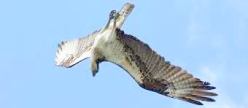
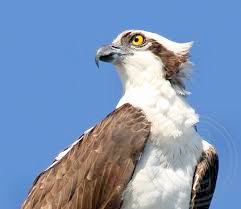
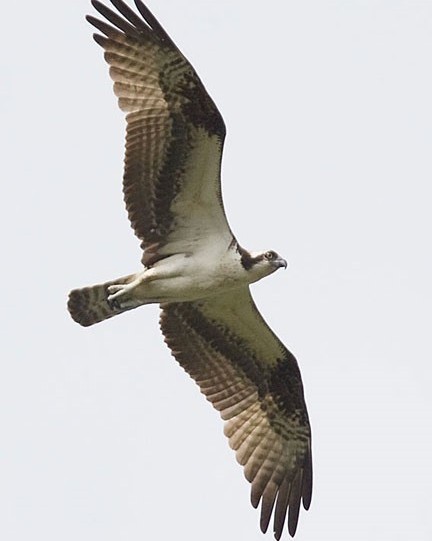
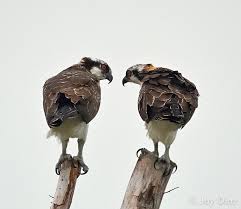
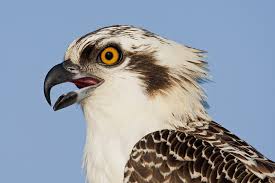
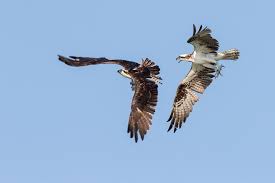
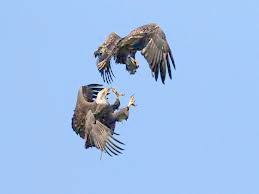
Osprey are not strictly territorial, as in other fish-eating birds. Fish are a mobile resource, hard to defend, making efficient defense of feeding sites unfeasible.

Male osprey will defend their immediate nest site, sometimes reaching out as far as 0.5 km, but in some situations, where the fish are plentiful osprey will nests “colonially,” with others. (e.g., inland Florida; Lake Istokpoga).

On wintering grounds, individuals are known to congregate where fish are abundant, but are generally more spread out, averaging 0.7 Ospreys/km in coastal mangroves in southeastern Brazil.

////////////////////////////////////////////////////////////////////////////////////////////

Ozzie is a little bit different. He has what some birds might consider a character flaw.

Posted in Ospreys | Leave a comment

Three Birds

The Doctor is at work trying to relieve the pain and suffering of other humans.
The female Homo sapien that lives with him in his giant nest on the bank of the North River is at home. She is keeping nest, protecting family, gathering food, creating a social life, paying bills, making investments and generally eliminating stressors the Doctor does not want to hear about. However, this morning she made an observation that she felt the Doctor must know immediately. Here is a copy of her email.
e henvelpoe (1)
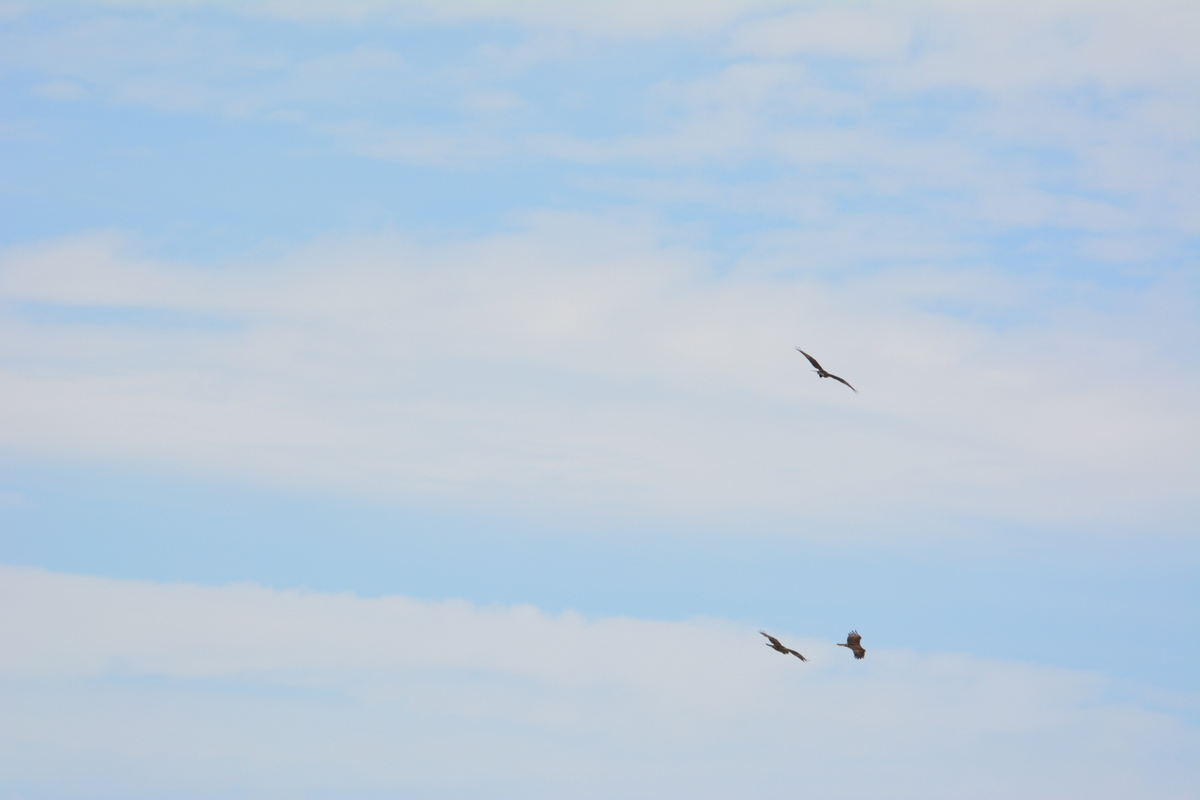
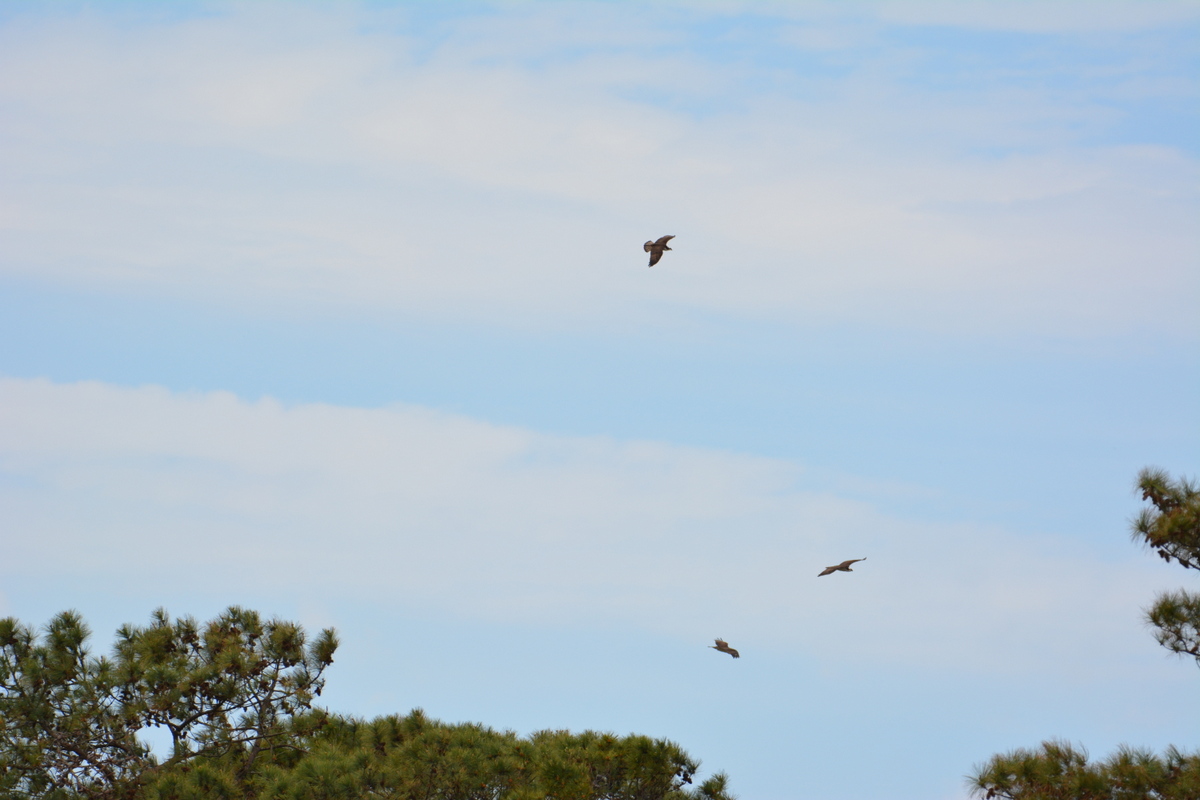
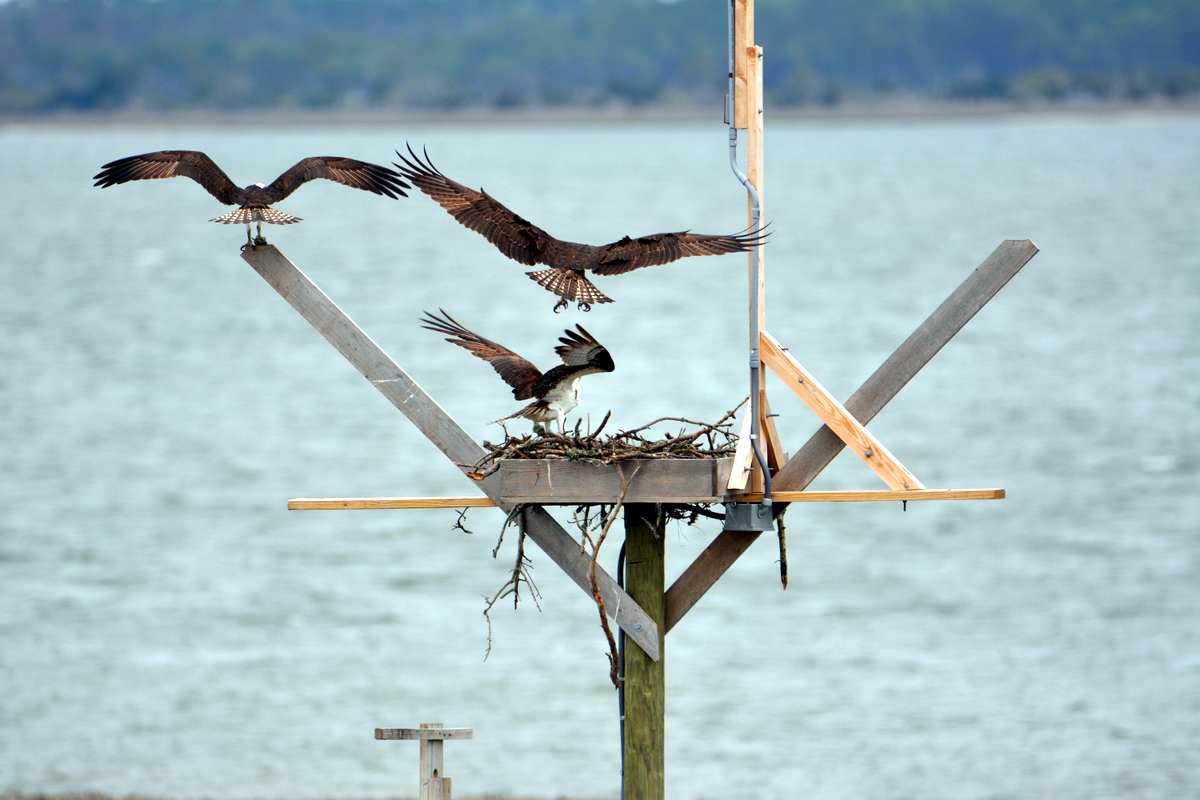
This is going to be interesting……….we seem to have three ospreys. One on the lower, two on the upper platform.
Female H. sapien, MD, FAAP, CPC

A pleasant ring tone, “Dawn Chorus,” chimed upon the Doctor’s desk.

cell phone on desk

He didn’t hear it; he never hears the soft pretty sounds that are supposed to attract his attention, even if it’s an arm’s length away, intentionally placed so that he will stop missing important communications. Sometimes when the Doctor works he becomes so absorbed in a particular case, he is oblivious to external stimuli.  It’s like he becomes a humanoid or something.  This peculiar, idiopathic, characteristic has been noted by more than one of his associates.

Nonetheless, at lunch time the Doctor checked his emails.

“What? Three osprey on the Taj Mahal?”
“Oh, no!” Thought the Doctor. “This could be trouble.”
“Are you sure you saw three?”
“I saw three,” Female H. sapien responded coolly, perturbed by the Doctor’s skeptical query.

Posted in Ospreys | 2 Comments

Osprey Nest 2

images

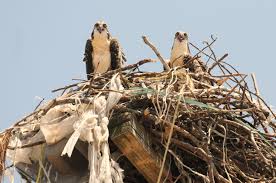
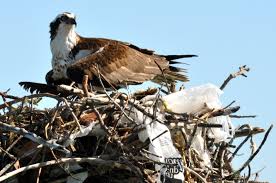
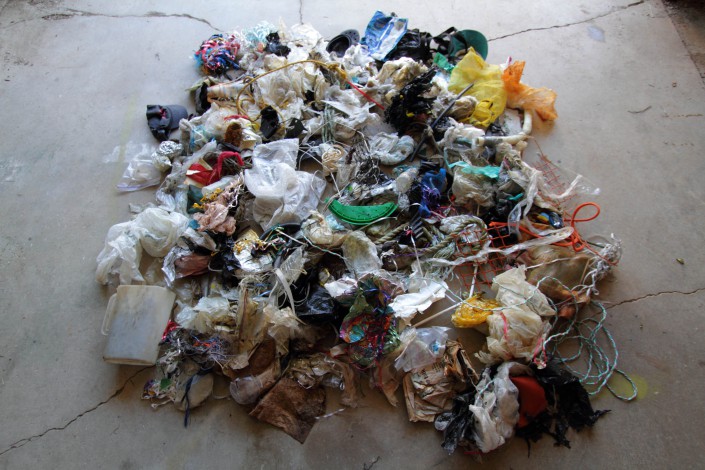
Osprey nests are large, built of sticks, and lined with bark, grass, algae. A sundry of shore line flotsam and jetsam are frequently found incorporated into their structures: plastic bags, pieces of plastic toys, fishing line and more. Ospreys have a strong desire to carry items back to their nest. They are beachcombers.

download images (1)

Looking at an osprey nest, one can tell how the world has changed. Writing in Ospreys: A Natural and Unnatural History, Alan Poole lists the oddities found in osprey nests in the nineteenth century: a rag doll; a small doormat; a toy sailboat complete with sail; a feather duster; barrel staves and hoops; a boot-jack; 20 feet of hem rope; a blacking brush; a remnant from an oilskin rain slicker; and bleached-out bones from domestic animals like cattle and sheep. Now, in the twenty first century we find: rubber boots; bicycle tires; Hula Hoops; sections of television antennas; bikini tops; styrofoam cups and plastic hamburger containers.

Here are some items used in osprey nest construction over the last couple of years.

Trash

Posted in Ospreys | Leave a comment

Recap

Ospreys return from their winter grounds in late March/early April and begin to rebuild their nests. Last year Ozzie arrived March 8, 2014. This year he did not arrive until Pi day, March 14, 2015. And even more remarkable Harriet did not arrive for another 9 days. There has been much speculation among our osprey watchers; why such a difference in arrival times? It seems the consensus points to the exceptionally cold winter in North America December-March 2015.

download (2) download download (1)

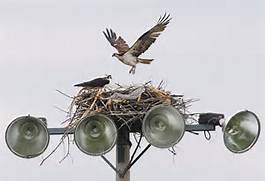
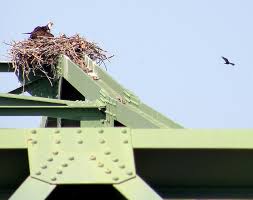
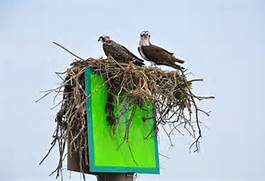
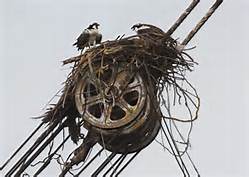
Osprey like dead trees, and often build their nests in the very topmost branches. Besides tall trees, the birds like utility poles, billboards, communication towers, channel markers, and bridge infrastructure.

lightsSC bridgees (2)greenD (2) cables8 (2)

Males generally select the nesting sites, which are typically close to water, open to the sky and safe from predators. Ospreys space their nests about one mile apart. They add sticks and branches to their nest every year they return. The male returns first to checkout the nest and start reconstruction. He then waits to greet the female. When she arrives the male will begin a courtship dance to entice her to the nest. The courtship display of the osprey involves aerial acrobatics with the male making repeated flights over the chosen nesting site, whilst clasping nesting material or a fish.
//////////////////////////////////////////////////////////////////////////////////

Posted in Ospreys | Leave a comment

Sky Dance

Love Birds
Pair 1 Pair
O & H

Ospreys are monogamous. Pairs repeatedly return to the same nest site, and often remain together for many years, sometimes, for life. Older individuals and, in particular, pairs that have bred together previously, tend to be more successful than newly formed pairs.

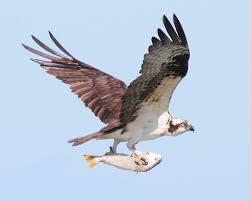
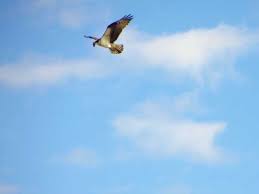
Males return to the breeding grounds before females and check out the nest site. Some males perform aerial displays even before females arrive. The displays, which peak after the female arrives, allow the male to “mark” his territory and to solicit the attention of a female. So called “sky dances” usually begin and end at the nest site, and while performing the display, males usually carry a fish or nesting material and call repeatedly a “creee” or “creeek creee.”

images (6) flight w fish

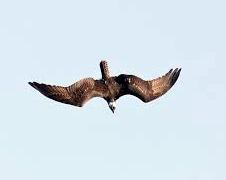
“Sky dances” incorporate undulating flights, which sometimes reach heights of 300 feet or more. At the top of each undulation, males typically hover briefly with their legs dangling and their tails fanned, and then dive downward with their wings drawn in. They may repeat this sequence several times. During courtship, males also provide food for their mates, follow them closely, and chase away other males.

///////////////////////////////////////////////////////////////////////

“I couldn’t help but laugh. I’ve never seen the Doctor so animated,” thought Harriett.
Ozzie and I were building the foundation for our new nest.

In a moment of spontaneity, Ozzie leaped off the platform and flew straight up, high over our new home.

highhh)

The Doctor look surprised, but then suddenly he realized Ozzie was about to Sky Dance.
And what a spectacular display did Ozzie perform. He’s always been good at Sky Dancing, but today he provided a magnificent show.

images (3) images (20) images

The Doctor jumped up from his rocker. He began yelling for the female H. sapien with whom he lives.
“Come Female H. sapien! Come now!” The Doctor cried anxiously.
“Come now!  You’re going to miss it!” The Doctor yelled.

The Doctor was overly excited.  Ozzie put on a spectacular display of his aerobatic skills. Later he told me he was just bearing witness to his love for me. It was a masterful Sky Dance.

You know, I really love that bird.

Anyway, I was trying to keep one eye on Ozzie and the other on the Doctor.

The Doctor was hooting and hollering, and jumping up and down, and calling for the female H. sapien in such a way I could not help but laugh.

laughddddd

It has really been a wonderful afternoon.

Harriett

Posted in Ospreys | Leave a comment

Nest Building

“Let me show you how it’s done.”

ARKive video - Pair of ospreys building a nest and mating

“Warning:  the last 30 seconds is rated R, for mature audiences only.”

Respectfully,

Harriett

Posted in Ospreys | Leave a comment

O & H Reunion

Ozzie 1 mile up River

Ozzie)

Ozzie surveyed his new domain.

“Fishing grounds to be expanded this year,” he thought.

He planned to expand them from North River marsh, to the south bank, to 1 mile up river. He cleared the competition. Ozzie is getting tougher and wiser as he approaches his 7th birthday.

“All clear, and all mine,” he thought.

“All mine and Harr…” he paused.

The stress was tearing him apart, the instinct to breed and his love for Harriett pulled his heart strings painfully.

“Nine days! Has my Harriett perished?”

“I need a mate; I’ve got to have a mate.”

Ozzie’s instincts pushed him forcefully.

“I’ll make one last circuit before dusk,” he decided.

power wings

Ozzie’s powerful wings lifted him from his perch. He made his circuit counterclockwise; east bank first, then the North River marsh, and turning northward he followed the west bank towards the Taj Mahal.

When Ozzie rounded the bend at North River marsh he could see the Taj Mahal ½ mile ahead. And on the Taj Mahal was a bird. Not just any bird, an Osprey. His keen eyes focused narrowly.

DSC_0035

“Could it be? Could it be Harriett, or am I in for a fight?”

downstroke)

With a few more powerful downward strokes, even in the fading light, he could see her necklace. A few more flaps and, “Oh my gosh, it’s Harriett!”

DSC_0034

Harriett flew up to the nine foot spire and stood majestically.

Harriett stood confidently looking the other way.

“I hope I look alright,” she thought.

She had gathered all her strength, groomed her feathers and stood looking, scanning the sky in hopes of seeing her mate.

Ozzie took in a deep breath.  His heart rate increased, as did his respiratory rate. He tried to calm himself. A lump encroached upon his throat.

Tears of Joy

download (1)

Ozzie blinked his nictitating membranes.

“The air is dry and flying at this speed irritates my eyes,” he rationalized his tears.

Ozzie landed on the platform and tripped over his own two talons.  He banged his forehead on the camera mount, then quickly spun around to greet her.

They stroked beaks as if they were sharpening knives. They pressed their necks together closely, as if to intertwine. Then a complex secreto-motor phenomenon occurred in Ozzie’s lacrimal apparatus (tear ducts); tears welled up from nowhere. He had to blink several times to disguise them.

(A neuronal connection exists between the osprey lacrimal gland (tear duct) and the areas of the osprey brain involved with emotion. Tears produced during intense emotion have a chemical composition which differs from other types of tears. They contain significantly greater quantities of the hormones prolactin, adrenocorticotropic hormone, leu-enkephalin and the elements potassium and manganese. Getting rid of these excess substances relieves tension by balancing the body’s stress hormones and eliminating the build-up of stress).

Ozzie felt like a wuss and was embarrassed.  He bolted off the platform and took a wide circumferential lap around his new 2015 home.

images

When he lighted again on the  platform he felt wonderful. Harriett had accurately assessed his feelings. Their love and friendship burst like an ember into a flame.

Posted in Ospreys | Leave a comment

It’s a Harsh, Cruel World Out There

Young ospreys start breeding by their 3rd year of life, but the mortality in young birds is incredibly high, with an estimated 57% of osprey chicks failing to reach breeding age. This rate decreases to 18% annually after the first year.

The average life expectancy for an Osprey is 10-15 years in the wild. An Osprey in captivity can live as long as 20 years or longer.

Nestlings and fledglings are most vulnerable to nest collapses, cold rains and high winds. In North America, the great horned owl is known to take over nest sites and has been documented to prey on young and adults.

images (2)
Not so friendly

Bald eagles compete directly with osprey for food resources and will often harass ospreys, forcing them to drop fish. Ospreys will typically avoid nesting in close proximity to eagle territories.

Osprey nests are often robbed by raccoons, American crows and the common raven.
Of course you know the DDT story. If you don’t, you should. Osprey numbers crashed in the early 1950s to 1970s, when pesticides poisoned the birds and thinned their eggshells. Along the east coast of North America about 90 percent of breeding pairs disappeared. After the 1972 U.S. DDT ban, populations rebounded, and the Osprey became a conservation success symbol.

As natural nest sites have succumbed to tree removal and shoreline development, specially constructed nest platforms and other structures such as channel markers and utility poles have become vital to the osprey’s recovery.

Contact with high power electrical grid lines near nesting areas continue to be a problem, but more important is the baling twine and fishing line issue.

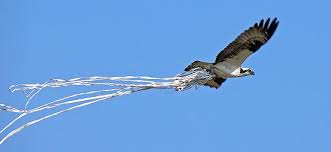
Ospreys typically line their stick nests with soft materials such as moss, grass and lichen, but they have a propensity to pick up discarded baling twine and fishing line to bind and adorn their nests. This creates a problem as the osprey’s talons easily become entangled in these man-made materials. Each year baling twine and fishing line are the cause of death for many adult osprey and their chicks. It has been estimated that baling twine alone kills about 10 percent of osprey chicks in some areas.

power innes twinejpg

Posted in Ospreys | Leave a comment

Ozzie’s Domain

Ozzie)
Ozzie 1 mile up River

Ozzie surveyed his new domain. He planned to expand his fishing grounds from North River marsh, to the south bank, to 1 mile up river. He made sure it was free of competition. Ozzie is getting tougher and wiser as he approaches his 7th birthday.

“All clear, and all mine,” he thought triumphantly.

“All mine, but wait a minute; I need a mate!”

The stress was tearing him apart, the instinct to breed and his love for Harriett pulled his heart strings painfully.

“Seven days; eight days! Has my Harriett perished?”

“I need a mate; got to have a mate,”

Ozzie’s instincts pushed him forcefully.

“I’ll make one last circuit before dusk,” he decided.

power wings
Ozzie’s powerful wings lifted him from his perch. He made his circuit counterclockwise; east bank first, then the North River marsh, and turning northward he followed the west bank towards the Taj Mahal.

Posted in Ospreys | Leave a comment

Harriett Arrives

Tuesday morning at 8:06 this haggard beauty struggled towards the platform.

Ruff
“Good grief, is that you Harriett,” asked the Doctor.

No response from the bird.

“What happened to you???!!!”

The migration North has been her toughest yet.

Harriett is so exhausted, so gaunt and emaciated, that she cannot respond.
The Doctor cannot even be sure it is Harriett. She looks pretty beat up.
Ozzie has not been seen for 6 days.

The Doctor is worried.


Posted in Ospreys | Leave a comment